
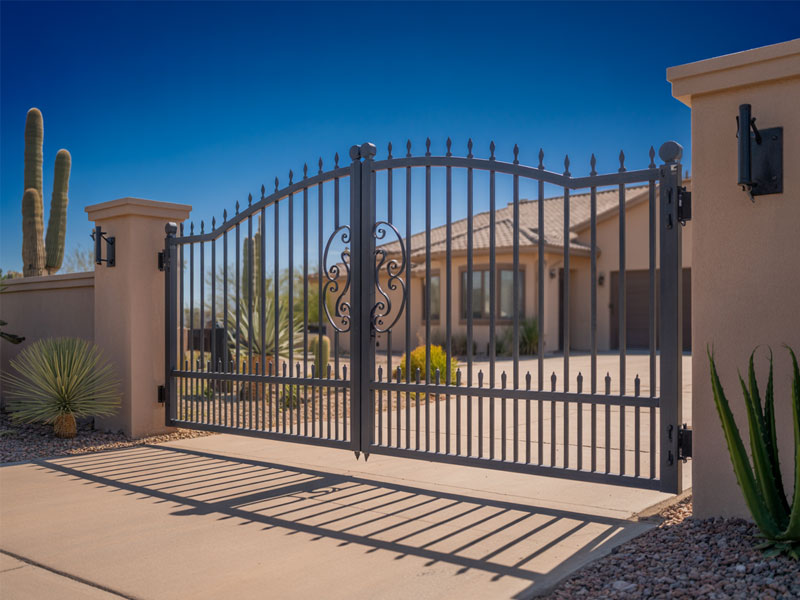
What Materials Are Best for Iron Gates in Arizona’s Climate?
Arizona puts more stress on iron gates than almost any other climate in the country. The combination of extreme UV exposure, temperatures that swing from below 40 degrees on winter nights to above 115 degrees on summer afternoons, dry, dusty air, and monsoon storms from June through September creates conditions that expose every weakness in a gate’s material or finish within a few years.
Most gate failures in the Phoenix metro area start with the coating, not the frame. A well-built steel gate with the wrong finish can start fading, chalking, and rusting within two to three years in full Arizona sun. The right material and the right finish process extend that to 15 to 20 years with minimal upkeep.
Iron FX Welding fabricates and installs custom iron gates in Mesa, AZ for residential and commercial properties throughout the East Valley. We build gates designed specifically for Arizona conditions, including galvanized frames, exterior-grade powder coating, and hardware sized for monsoon wind loads. Call 480.900.1540 for a free estimate.
How Arizona’s Climate Damages Gates Faster Than Most States
Understanding why Arizona is hard on gates helps you ask better questions before you buy.
The UV index in Arizona regularly reaches 10 to 11 during summer months, which the EPA classifies as extreme. That level of UV exposure degrades paint and low-grade powder coat finishes significantly faster than in moderate climates. A coating that lasts 10 years in Ohio may start chalking and fading in 3 to 4 years on a west-facing gate in Mesa.
Heat compounds the problem. Metal expands when it heats up and contracts when it cools. A steel gate installed in January sits at a different dimension than the same gate in July when surface temperatures on exposed metal can reach 150 degrees or higher.
Gates fabricated without accounting for thermal movement can bind, sag, and put stress on welds and hinge points over time.
Dry air between storms is easier on metal than humid climates, but it creates problems for wood components. Cedar, treated pine, and wood-filled gates crack, split, and loosen at fasteners as the material cycles through heat and dryness. All-metal gate construction avoids this entirely.
Monsoon season is where weak hardware and thin pickets get exposed. The National Weather Service documents Arizona monsoon storms producing wind gusts of 40 to 60 mph regularly, with stronger downbursts exceeding those levels.
Wide driveway gates, RV gates, and commercial sliding gates face significant lateral force loading during these events. Undersized posts, light hinges, and thin picket stock can rack or sag after one severe storm even when the finish still looks acceptable.
The Three Best Materials for Iron Gates in Arizona
Powder-coated steel is the best all-around choice for most Arizona residential and commercial gate applications. Stainless steel is the premium low-maintenance option. Galvanized steel under the powder coat layer is what separates a gate that lasts 5 years from one that lasts 20 years in the Phoenix climate.
Most gates sold and marketed as “wrought iron” in Arizona today are ornamental steel fabricated to look like traditional wrought iron. That is not a problem, but it means the questions you ask about the base metal, wall thickness, and finish process matter more than what the gate is called.
Powder-Coated Steel
Powder-coated steel is the most common and cost-effective material choice for Arizona gates, and when it is done correctly, it holds up well in desert conditions. The key phrase is “done correctly,” because the preparation process determines whether a powder coat lasts 3 years or 15 years in Arizona sun.
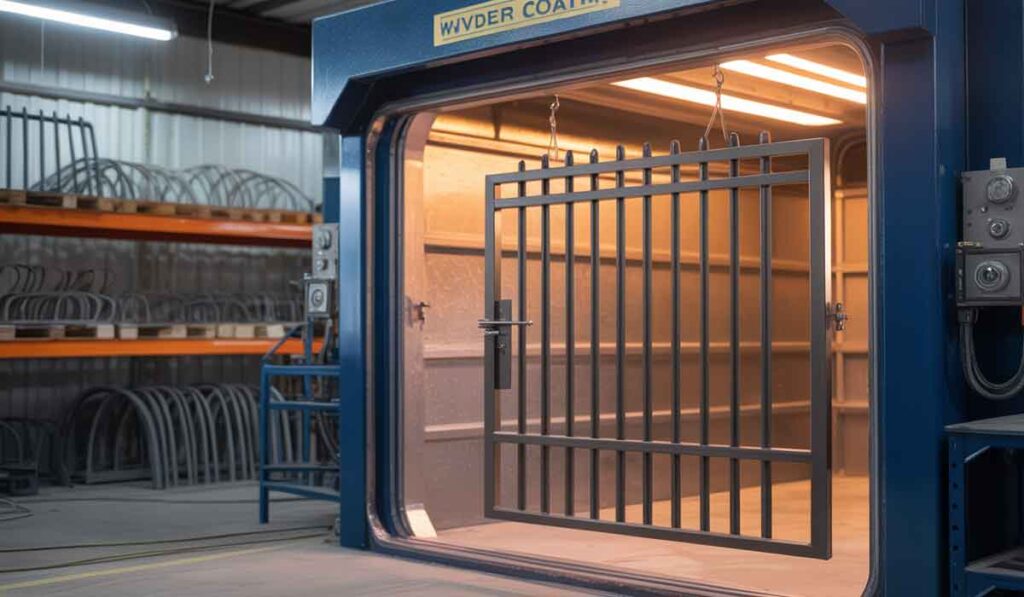
A proper process for exterior steel gate fabrication in Arizona should include sandblasting the steel to bare metal before any coating is applied, a zinc-based primer coat to create a corrosion barrier between the raw steel and the topcoat, and an exterior-grade polyester powder coat applied at 2 to 4 mils thickness and cured at around 400 degrees. The powder coat bonds to the metal rather than sitting on top of it the way liquid paint does.
When evaluating a fabricator, ask specifically whether they use an exterior polyester powder system. Epoxy powder coatings are common in shops because they are durable in indoor environments, but direct UV exposure causes epoxy coatings to chalk and fade significantly faster than polyester systems outdoors. An AAMA 2604 rated finish is a useful benchmark for exterior color retention.
Coating failure almost always starts at edges, welds, cutouts, and sharp corners where coverage is thinner. A fabricator who grinds weld points smooth and ensures full coverage at edges before coating is doing work that will show up in how the gate looks after five Arizona summers.
Iron FX Welding in Mesa sandblasts all exterior gates to bare metal and applies a zinc primer before powder coating. Call 480.900.1540 to discuss gate fabrication and finishing options.
Galvanized Steel Under Powder Coat
Galvanizing adds a zinc layer to the steel before fabrication or finishing. In an Arizona gate application, a galvanized frame under a powder coat topcoat creates what the coating industry calls a duplex system.
The American Galvanizers Association documents that a duplex system typically lasts 1.5 to 2.3 times longer than either the galvanizing or the powder coat alone.
For most Mesa homeowners, this means the practical difference between a galvanized and powder-coated gate versus a non-galvanized powder-coated gate is roughly 10 to 15 additional years of service life before any significant refinishing is needed. In Arizona’s climate that difference is meaningful.
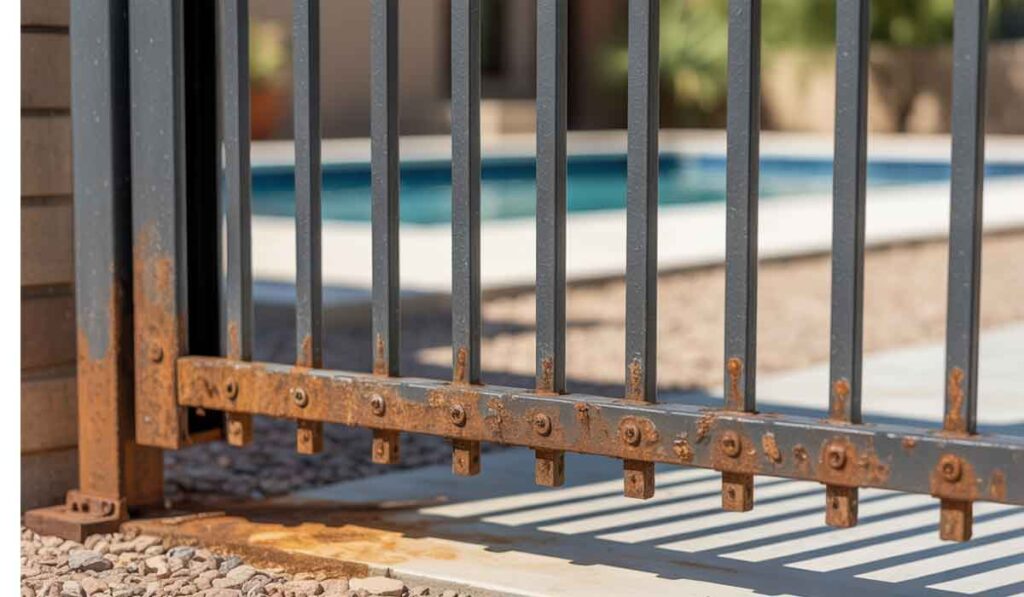
Galvanizing is particularly important for post bottoms, bottom rails, and any portion of the gate frame that sits close to the ground. Irrigation overspray, monsoon moisture pooling at the base, and direct soil contact all accelerate corrosion at the lower portion of the gate frame.
Galvanized steel in those locations provides a corrosion barrier that bare steel with powder coat alone cannot match over the long term.
If a fabricator does not mention galvanizing as part of their standard gate process, ask about it directly. The cost difference is modest and the service life difference in Arizona conditions is significant.
Stainless Steel
Stainless steel is the premium material choice for Arizona gates where the priority is long-term low maintenance and a clean modern appearance. It does not rust under normal conditions, holds its appearance without repainting, and handles Arizona’s UV and heat conditions well over extended periods.
Grade 304 stainless steel is appropriate for most inland Arizona residential applications including Mesa, Gilbert, Chandler, and Scottsdale. Grade 316 stainless is the better choice for gates that sit near saltwater pools, receive heavy irrigation overspray regularly, or are exposed to chemical contact. Grade 316 has a higher molybdenum content that provides better resistance to pitting and surface corrosion in those conditions.
One detail worth confirming when ordering stainless steel gates is whether the fabricator uses dedicated stainless tools and performs passivation after fabrication.
Surface rust on stainless steel gates often starts not from the alloy itself but from iron contamination introduced during fabrication when standard carbon steel tools are used on stainless. Passivation removes that contamination and restores the protective oxide layer on the surface.
The primary limitation of stainless steel is cost. A stainless gate typically runs 30 to 60 percent more than a comparable powder-coated steel gate. For clients who prioritize minimal long-term maintenance over upfront cost, that difference pays for itself over a 20-year ownership period.
What to Ask Your Gate Fabricator in Arizona
Most gate failures in Arizona are preventable and most of them trace back to questions that were not asked before the job was ordered. These are the specific questions that separate a gate that lasts from one that needs refinishing in three years.
Ask what base metal is being used. The answer should include the steel thickness or gauge, whether the frame is galvanized, and what type of steel is used for the main structural components versus the pickets and decorative elements.
Ask what finishing process is used step by step. A complete answer covers surface prep method (sandblasting versus mechanical prep), primer type, powder coat system type (polyester versus epoxy), application thickness, and cure temperature. Any fabricator who does quality exterior work in Arizona can answer all of these questions specifically.
Ask how welds and edges are treated before coating. Clean weld grinding, edge deburring, and full coverage at corners and cutouts are what prevent coating failure from starting at the weak points in the gate structure.
Ask what hardware is included. Hinges, latches, and hardware should be sized for the gate weight and the wind loads common in Arizona monsoon conditions.
A 12-foot double driveway gate requires significantly heavier hinge and post hardware than a pedestrian side yard gate, and that difference should show up in the quote and the hardware specification.
Ask whether the quote includes removal and disposal of the existing gate if you are replacing one. Demolition and haul-away are real labor costs that are sometimes excluded from fabrication quotes and added at the end.
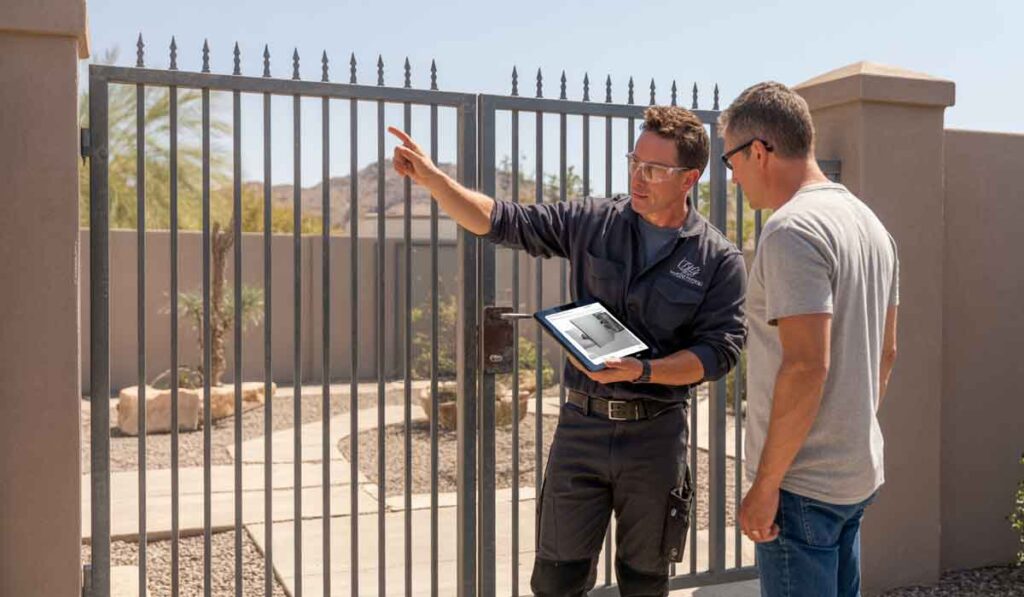
Iron FX Welding in Mesa will answer all of these questions in writing before you approve any gate fabrication work. Call 480.900.1540 to schedule a free site visit and written estimate.
Matching Gate Style to Arizona Home Architecture
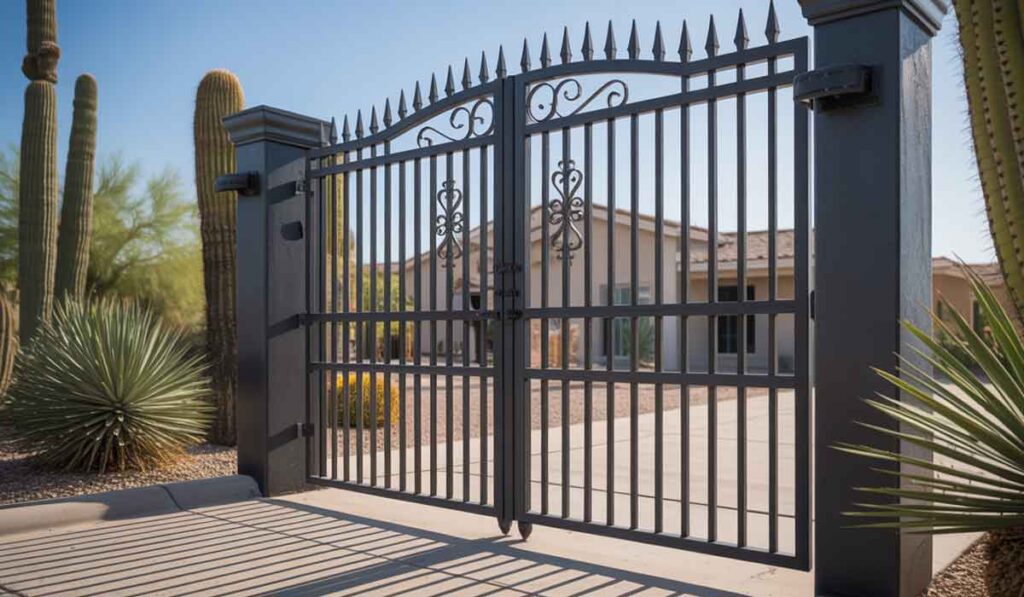
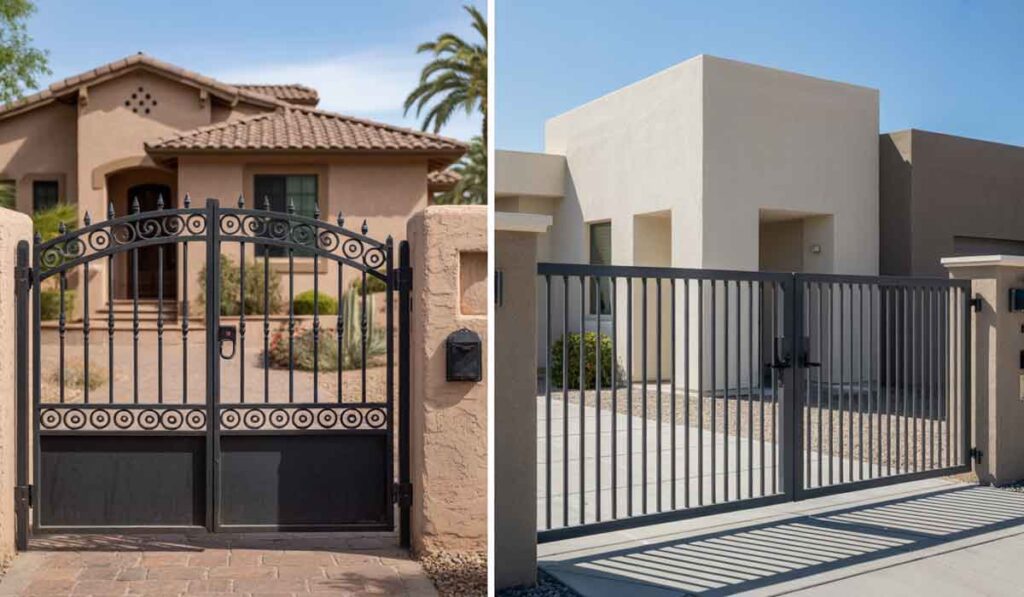
The right gate material and design choice depends partly on the home’s architectural style. Arizona homes range from modern desert contemporary to traditional Mediterranean and Spanish Revival, and gate designs that fit one style look out of place on another.
Mediterranean and Spanish Revival homes are the most common gate context in Mesa and the East Valley. Arched tops, scroll details, spear finials, and warm black or bronze finishes work well on these homes. Powder-coated steel or a galvanized ornamental steel gate with scroll elements is the standard material choice for this style.
Modern and contemporary homes suit simpler gate profiles with flat horizontal bars, clean geometric spacing, and minimal decoration. Stainless steel or smooth powder-coated steel with a matte black or charcoal finish reads cleanly on these homes. Decorative scrollwork looks out of place on a home with clean architectural lines.
Craftsman and mission-style homes work well with square pickets, straighter geometry, and lower-profile gate designs. The hardware and finish should stay understated rather than decorative.
If the property has matching steel fencing, iron doors, or other metal elements at the entry, staying within the same finish family rather than trying to match exactly gives the entry a more cohesive look. Exact color matching between different fabricators and different substrate metals is difficult and rarely necessary.
Maintenance Requirements for Iron Gates in Arizona’s Climate
The right material and finish significantly reduces maintenance, but no exterior metal gate in Arizona is completely maintenance-free. A simple seasonal routine keeps the gate looking good and functioning correctly for years longer than neglect.
After dust storms, rinse the gate with water to remove abrasive grit before it works its way into hinge bearings and latch mechanisms. Fine Arizona dust is mildly abrasive and accelerates wear on moving hardware when it is allowed to accumulate.
After monsoon season ends in late September, inspect all welds and hardware for any stress damage, hinge movement, or posts that may have shifted. Catch problems at the hinge point or post base in October and they are usually minor repairs. Catch them two years later and they are larger projects.
Touch up any coating chip promptly. Chips in powder coat expose bare steel underneath and rust begins at that point. A matching powder coat touch-up pen applied within a few weeks of a chip appearing stops the damage at the surface. Left alone for a season, the rust undercuts the surrounding coating and the repair becomes more involved.
Lubricate hinges and latch mechanisms once or twice per year with a silicone-based lubricant. Avoid petroleum-based products on exterior hardware in Arizona because they attract dust and dry out faster in the heat.
Keep sprinkler heads pointed away from gate posts and bottom rails. Regular irrigation overspray at the base of a post is one of the most consistent causes of early corrosion on otherwise well-finished gates in Mesa residential properties.
Iron FX Welding in Mesa repairs existing iron gates including weld restoration, hinge replacement, hardware upgrades, and refinishing. If your existing gate needs work before the next monsoon season, call 480.900.1540 for a free assessment.
Frequently Asked Questions
Iron Gate Materials for Arizona Homes
What is the best material for an iron gate in Mesa AZ?
Powder-coated galvanized steel is the best all-around choice for most Mesa residential gates. It provides strong weather resistance, long finish life, and a clean appearance at a cost that works for most budgets. The galvanized zinc layer beneath the powder coat creates a corrosion barrier that significantly extends the gate’s service lifecompared to non-galvanized steel with the same topcoat. Iron FX Welding in Mesa uses a full prep process, including sandblasting and zinc primer, on all exterior gate fabrication. Call 480.900.1540 to discuss material options for your gate project.
How long does powder coat last on an iron gate in Arizona?
A powder coat finish applied over properly prepped and primed steel typically lasts 10 to 15 years on an exterior gate in Arizona before needing significant refinishing. The variables that affect that range are the prep quality before coating, whether a primer coat was applied, whether the powder system is an exterior-grade polyester rather than an epoxy, and how much direct south or west sun the gate receives. Cheap powder coat applied without sandblasting and primer can start failing in three to four years in full Arizona exposure. Iron FX Welding in Mesa will tell you specifically what prep and finish processes are included in every gate fabrication quote. Call 480.900.1540.
Should I choose stainless steel or powder-coated steel for my Arizona gate?
For most Mesa homeowners, powder-coated galvanized steel provides excellent service life at a lower upfront cost. Stainless steel is worth the premium if you want the lowest possible long-term maintenance, a clean modern appearance, or if the gate will be near a saltwater pool or heavy irrigation. Stainless steel typically runs 30 to 60 percent more than a comparable powder-coated steel gate. Iron FX Welding in Mesa fabricates both and can provide quotes for each option so you can compare total cost of ownership. Call 480.900.1540.
What causes iron gates to rust in Arizona if the climate is so dry?
The primary rust triggers for iron gates in Mesa and the East Valley are irrigation overspray at the post base and bottom rail, monsoon-season moisture, and coating failures that expose bare steel beneath. Arizona is dry most of the year, but most residential properties run sprinkler systems year-round and monsoon season brings high humidity and rain. Any bare steel exposed through a chip or coating failure will start rusting in those conditions. Proper galvanizing and exterior-grade powder coat prevent this. Iron FX Welding in Mesa builds gates with galvanized frames and exterior powder coat to address both causes. Call 480.900.1540.
Do Arizona iron gates need special hardware for monsoon wind?
Yes. Standard residential gate hinges and latches are sized for normal daily use and may not hold up under the 40 to 60 mph wind gusts that Arizona monsoon storms produce regularly. Wide driveway gates, RV gates, and commercial gates need heavy-duty barrel hinges, reinforced post anchors, and a latch that stays aligned under lateral wind load. Iron FX Welding in Mesa sizes hardware to the gate dimensions and weight, and factors monsoon wind loading into post anchor depth and hinge selection. Call 480.900.1540 to discuss hardware specifications for your gate project.
How much does a custom iron gate cost in Mesa AZ?
Custom iron gate costs in Mesa depend on width, height, design complexity, material choice, and whether automation framing is included. Pedestrian and side-yard gates typically run $800 to $1,800 for standard designs. Double driveway gates generally run $2,000 to $5,500. RV gates, which require wider clearances and heavier hardware, typically run $1,500 to $5,000. Iron FX Welding in Mesa provides written quotes with material and labor separated before any work begins. Call 480.900.1540 or text a photo of your existing gate or opening for a free estimate.
Ready for a Free Gate Fabrication Estimate in Mesa?
Iron FX Welding is based in Mesa, AZ and fabricates custom iron gates for residential and commercial properties throughout the East Valley including Gilbert, Chandler, Tempe, Scottsdale, and Apache Junction. All exterior gates are fabricated with Arizona’s climate in mind: proper metal gauge, galvanized frames where specified, exterior polyester powder coat over zinc primer, and hardware sized for monsoon conditions.
Call or text 480.900.1540. Send a photo of your existing gate or opening and we will provide a written estimate before scheduling a site visit.
Iron FX Welding, Mesa AZ. Licensed and insured. Free estimates on all gate fabrication and installation.