
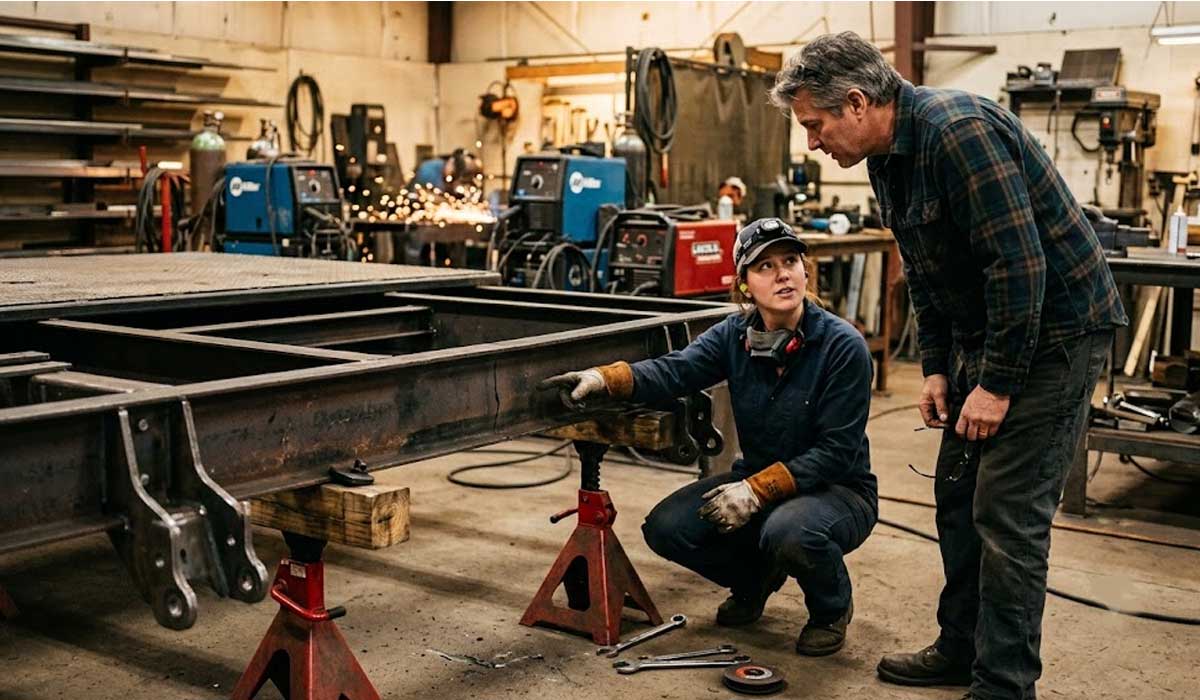
Should You Repair or Replace a Cracked Trailer Frame?
You found a crack in your trailer frame, and now you are stuck on the real question: is this a quick weld, or is the trailer done?
It is a fair thing to wonder, because the answer changes everything from what you spend to whether the trailer is safe to load next week.
Here is the short version. A cracked frame is usually worth repairing when the damage is localized, the surrounding metal is still sound, and the repair cost stays well under what a replacement would run.
Replacement starts to make sense when the damage is widespread, rust has eaten into the structure, or the same repair keeps failing. This guide walks through how to tell which situation you are in.
Iron FX Welding repairs trailer frames across Mesa and the East Valley, and this is the same logic our crew uses when a trailer comes in cracked.
Key Takeaways
- Repair usually wins when the crack is localized, the rail is otherwise straight, and rust is light.
- Replacement usually wins when there are multiple severe cracks, heavy rust-through, visible twist, or repeat failures at the same spot.
- Damage location matters more than crack size. Cracks at hangers, tongues, and couplers are safety repairs, not cosmetic ones.
- A common rule of thumb: lean toward repair when the fix stays under roughly 40 to 50 percent of replacement cost.
When a Trailer Frame Can Be Repaired by Welding
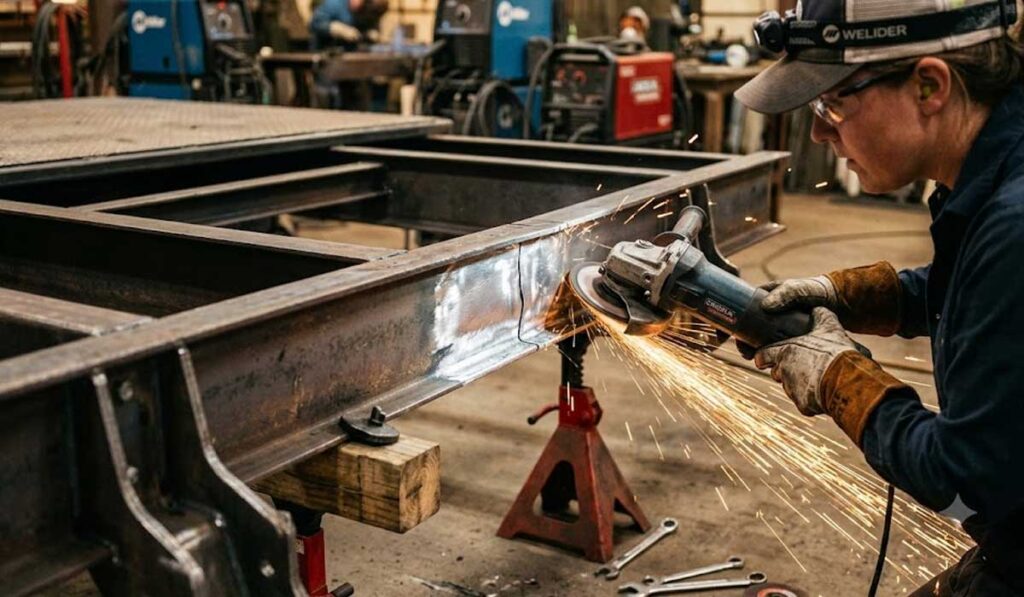
A frame crack is typically repairable when the problem is contained and the base metal still has good strength left. Most of the trailer repairs a shop sees fall into this category, which is good news for owners.
A frame is a strong candidate for welding when you have:
- Localized cracks at brackets, gussets, or weld toes, where the rest of the rail is straight and solid. These get ground out, re-welded, and reinforced with a plate.
- Minor bends or twists that can be pulled back into alignment with straightening equipment, then reinforced, as long as there are no long cracks or rust-through nearby.
- Limited rust, meaning surface rust or light pitting only, with no history of failed major repairs. The surrounding metal can still carry its design loads after the fix.
A practical guideline that shops and cost guides use: repair is usually the better call when crack welding, straightening, and reinforcement together stay under roughly 40 to 50 percent of full replacement cost.
When the math lands there and the metal is sound, welding is almost always the smarter money. The only way to know for sure is to have someone look at the actual damage, which is why Iron FX offers a free on-site estimate before any work starts.
When Replacement Makes More Sense
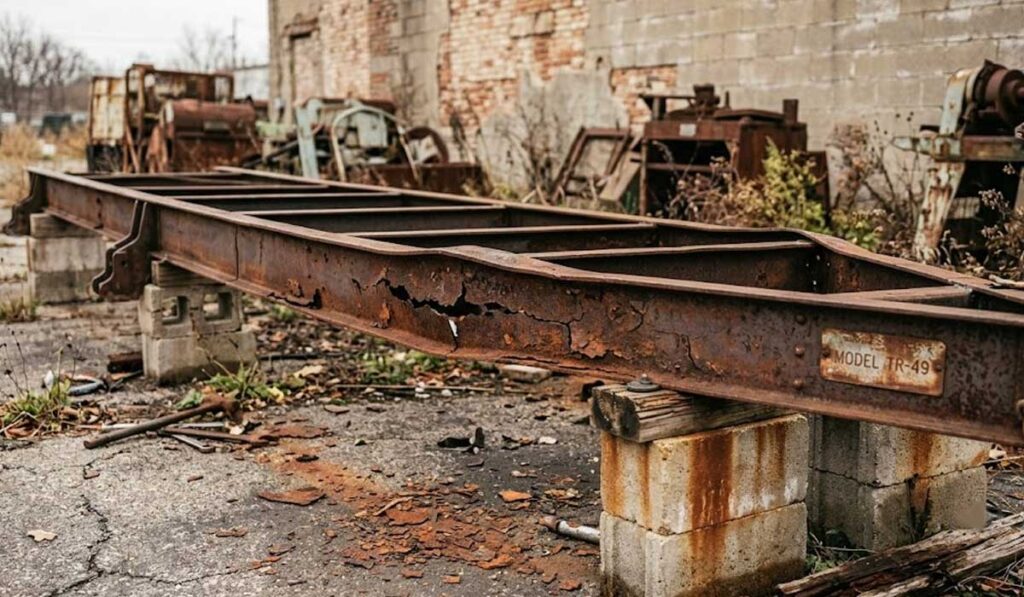
Replacement becomes the safer and often the more economical choice when damage or deterioration is extensive, especially in the areas that carry the most load.
Lean toward replacing a section or the whole frame when you see:
- Multiple areas of severe cracking, extensive rust-through along the rails or crossmembers, or a frame that is visibly sagging or twisted beyond about an inch across its length.
- Prior major repairs that have failed, meaning the same spot cracks again or several patched areas are spread across the frame. That pattern says the remaining fatigue life is low and the structure may not reliably hold new welds.
- Corrosion that has thinned the metal near suspension mounts, tongues, or couplers. Once material loss is significant in those spots, welding a crack does not restore the load capacity the frame needs.
There is a simple honesty test here. If a frame has failed at the same weld twice, the weld was never the real problem. The underlying stress or misalignment was, and no amount of fresh bead fixes that. When we see that pattern, we say so rather than sell you a third repair that will not hold.
Safety Factors That Override Cost
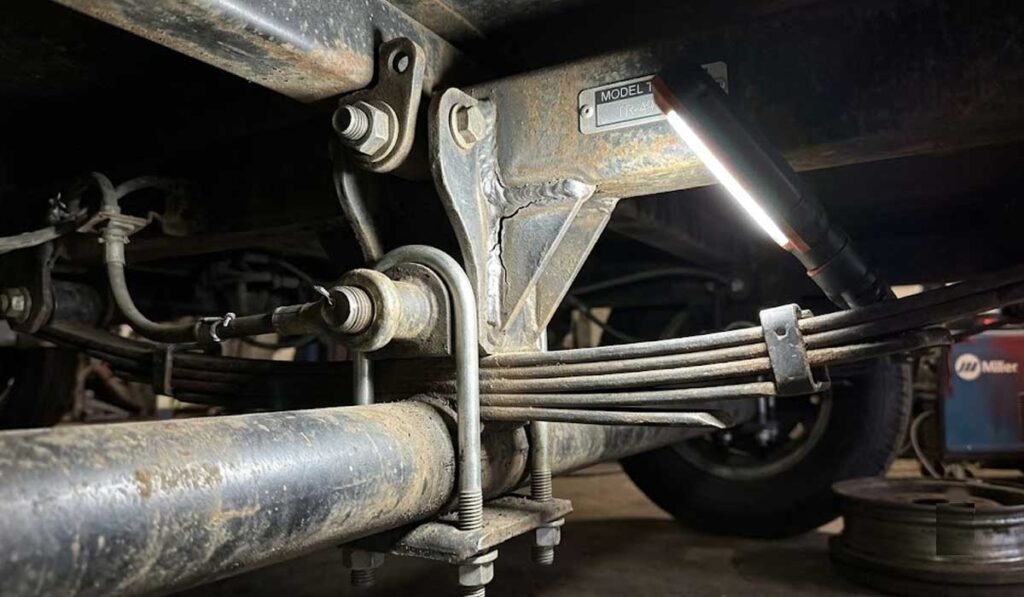
Some damage can technically be welded but should not be, because the cost math is not the only thing that matters. Where the damage sits and how it behaves often decides the call before price ever enters the picture.
Weigh these safety factors heavily:
- Location of the damage. Cracks or bends at spring hangers, equalizers, axle seats, tongues, and coupler mounts are far more serious than damage in a lightly loaded crossmember, because failure in those spots affects control and stability on the road.
- Extent and pattern. Long or branching cracks, several cracks around one joint, or a crack that reopens after a prior repair all point to underlying stress or misalignment that welding alone will not resolve.
- Material condition. Deep rust pitting, flaking, or perforation near the damage means the metal is already weakened, so welding into it may not restore proper strength or fatigue resistance.
- Intended use. Heavy commercial loads, high speeds, and long-distance towing all demand a bigger safety margin. A frame used that way is more likely to earn a section replacement rather than a patch weld.
There is also a regulatory and liability angle. If an inspector or an insurer might deem the frame unsafe despite a repair, the conservative replacement decision protects you. For commercial trailers especially, that call is worth making carefully.
Age, Value, and the Economics
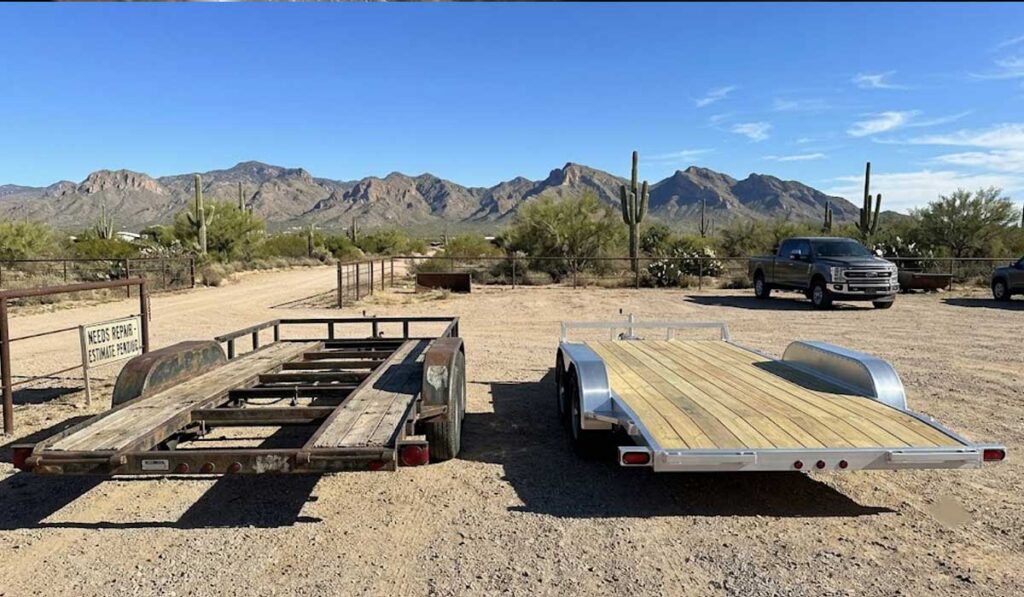
Age and market value shape whether a repair is worth it even when it is technically possible. This is where a lot of owners talk themselves into the wrong decision, so it helps to run the numbers honestly.
Keep these economics in mind:
- Trailer age. Units past roughly 10 to 15 years, especially ones that already need frequent repairs, tend to lean toward replacement rather than a structural rebuild.
- Current value. Compare the repair quote to what the trailer is actually worth. When structural repairs would run more than about half the trailer’s market value, replacement often makes better sense.
- Use and configuration. A custom or specialty trailer that is expensive or hard to replace can justify more repair spend. A basic utility or boat trailer is often replaced once repairs climb into the several-thousand-dollar range.
- Long-term cost. Repeated small repairs on an aging, corroded frame can add up to more than a single replacement and still leave you with a less reliable trailer. Look at expected remaining life, not just today’s fix.
For context, published national repair ranges put crack welding in the hundreds to low thousands, straightening higher, and full frame replacement much higher still, often many times the cost of a targeted weld repair.
Those are general industry figures, not a quote. Every trailer is different, and the only accurate number is the one that comes from looking at yours. Iron FX gives you that number free before any work begins.
How Iron FX Makes the Call in Mesa
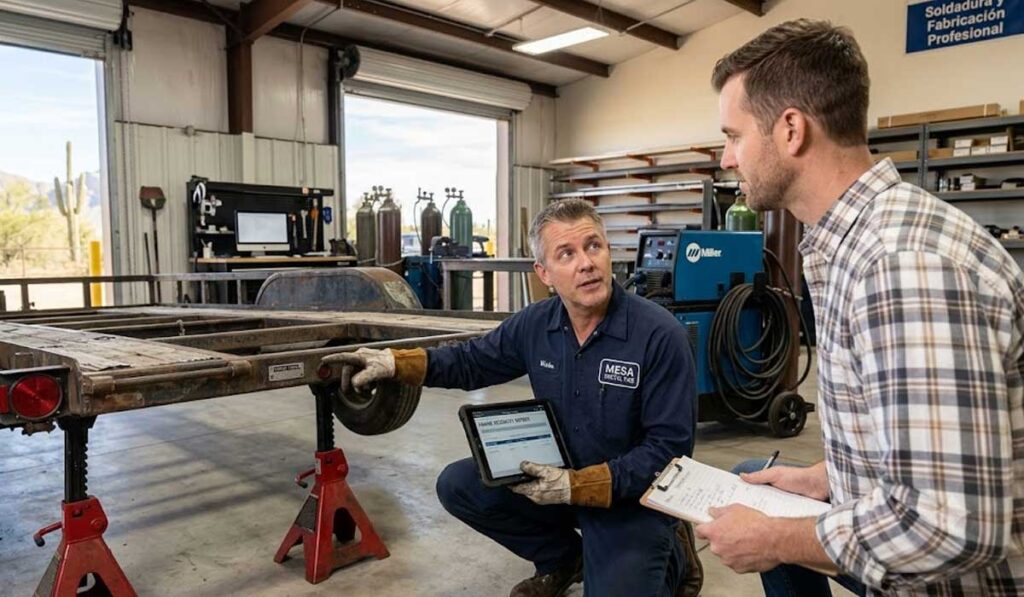
When a cracked trailer comes to Iron FX, the process is simple and straightforward. We inspect the damage in our Mesa shop or at your location anywhere in the East Valley, and we tell you honestly what we see.
If it is a localized crack in sound metal, we grind it out, weld it properly, and reinforce it so it holds. If the frame is too far gone to repair safely, we tell you that too, rather than take your money for a fix that will not last.
We do not push a repair on a trailer that is not worth saving, and we do not push a replacement on one that only needs a good weld. That honesty is the whole point, because the goal is a trailer you can load and tow without wondering.
If you are anywhere from Mesa to Gilbert, Chandler, Tempe, or Scottsdale and you are not sure which side of the line your trailer is on, we will look at it and give you a straight answer.
Frequently Asked Questions – Trailer Frame Repair or Replace
Can a cracked trailer frame be safely welded?
In many cases, yes. A localized crack in a frame that is otherwise straight and structurally sound can be safely repaired by grinding the crack out to bright metal, welding it with full penetration, and reinforcing the area with a plate or gusset. The key word is localized. Widespread cracking, heavy rust, or damage at a critical load point changes the answer. An inspection is the only way to know for certain. Iron FX inspects and repairs trailer frames across Mesa and the East Valley.
How do I know if my trailer frame is beyond repair?
Look for the warning patterns that point past a simple weld: multiple severe cracks, rust-through along the rails or crossmembers, a frame that sags or twists more than about an inch over its length, or a repair that keeps failing at the same spot. Corrosion that has thinned the steel near suspension mounts, tongues, or couplers is another strong signal. If you see several of these together, replacement is usually the safer path. Call 480-900-1540 and we can assess it for you.
Is it cheaper to repair or replace a trailer frame?
Repair is almost always cheaper than replacement when the damage is localized and the metal is sound, which is why a targeted weld beats a full frame swap in most everyday cases. The decision flips when repairs pile up. A useful rule of thumb is to lean toward repair when the total fix stays under roughly 40 to 50 percent of replacement cost, and toward replacement when it climbs past that or past about half the trailer’s value. Iron FX quotes the repair free so you can run that math with a real number.
Is it safe to tow a trailer after a frame weld repair?
A properly done structural repair, with the crack fully ground out, welded with the right process, and reinforced where needed, restores the frame to safe towing condition for its rated load. A quick patch weld over an unprepped crack does not, and those are the repairs that fail again. The difference is in the prep and the reinforcement, not just the bead. This is why frame repairs are worth handing to a trained welder rather than treating as a quick fix.
Does welding a trailer frame weaken it?
Done correctly, a repair restores strength and can even reinforce a weak spot with added plating. Done poorly, welding can introduce new stress points, especially if the crack was not fully removed, the heat was not controlled, or reinforcement was added in the wrong place. That is the whole reason technique matters on structural repairs. A good welder respects the frame’s load paths rather than just adding metal. Iron FX handles this kind of structural trailer repair every week in Mesa.
Can Iron FX inspect my trailer frame before I decide?
Yes. Iron FX offers a free estimate and can inspect your trailer in our Mesa shop or at your location across the East Valley through our mobile service. We will tell you honestly whether the frame needs a weld, reinforcement, or replacement and give you a real number before any work starts. Call or text 480-900-1540 and send a photo of the damage if you can.