
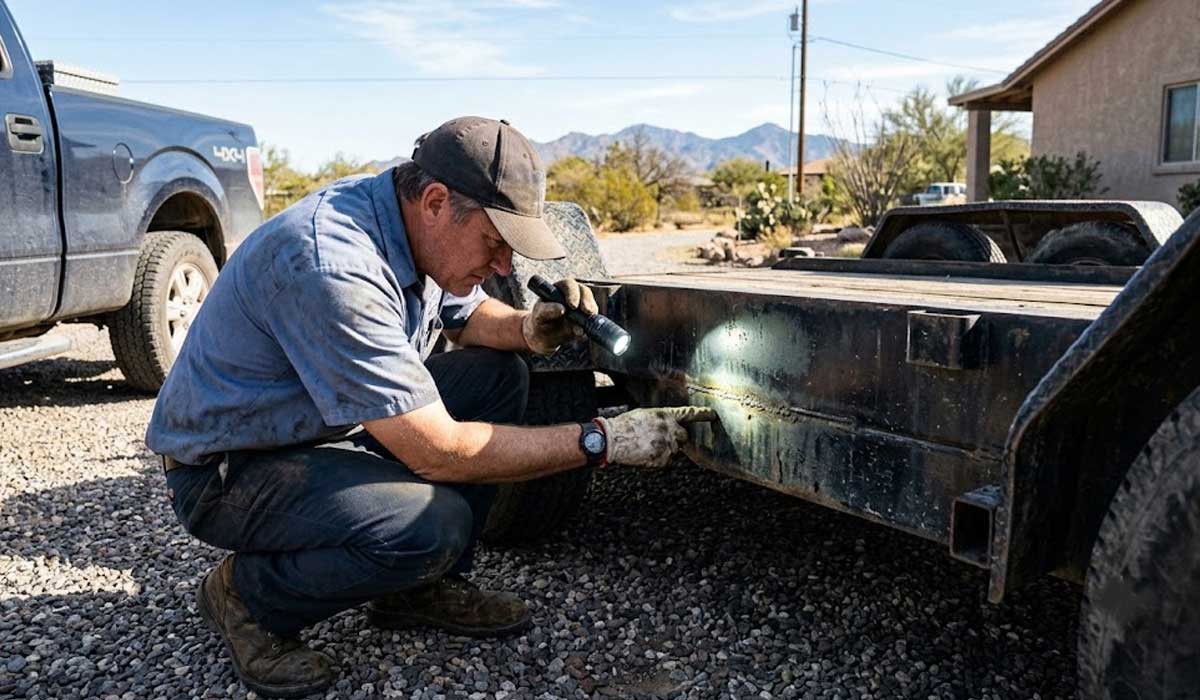
How to Tell If Your Trailer Frame Is Safe to Tow
Worried your trailer frame might not be safe to tow? If you are seeing cracks, deep rust, a bent tongue, or uneven tire wear, your trailer is telling you to take a closer look.
The good news is that most unsafe conditions show warning signs well before a failure happens.
This guide walks you through the checks a welder would run before towing a utility trailer, camper, or boat trailer. It shows you where to look first, what actually affects towing safety, and what should make you cancel the trip.
Iron FX Welding repairs trailer frames across Mesa and the East Valley, and this is the same inspection logic our crew uses when a trailer rolls into the shop.
Key Takeaways
- Inspect the main frame rails and crossmembers for cracks, bends, rippling, and rust that has moved past the surface.
- Make sure the coupler matches the hitch ball, locks tightly, and the tongue shows no cracking or deformation.
- Check spring hangers, shackles, leaf springs, and U-bolts for wear, misalignment, and broken welds.
- Watch for uneven tire wear and a frame that no longer sits level, and do not assume a weight-distribution hitch can hide real frame damage.
Inspect the Frame Rails and Crossmembers
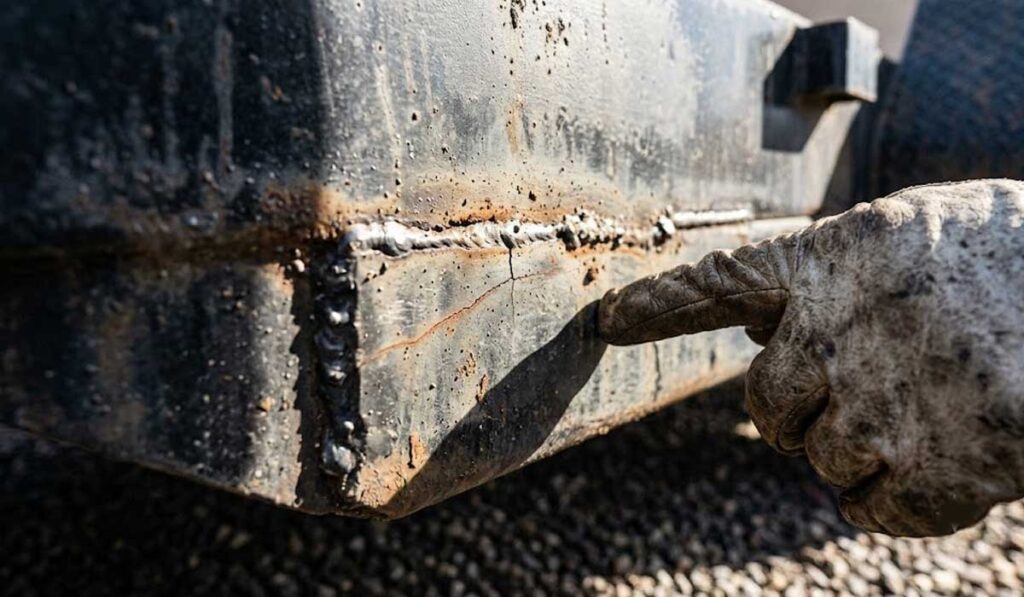
Start here because the frame rails and crossmembers carry every load your trailer sees. Trailer Safety Week materials from the National Association of Trailer Manufacturers recommend inspecting structural frame members and fasteners at least once a year. It is also smart to check them before any long haul and after a hard curb hit.
Check for Cracks, Bends, or Rippling in the Metal
Look down each rail from front to back. A healthy rail stays straight, so any bow, buckle, ripple, or twist points to impact damage, metal fatigue, or an overloaded axle.
Pay extra attention to the spots that crack first:
- where the tongue meets the main frame
- around spring hangers and axle seats
- at crossmember ends and weld toes
- near any previous repair plates or fresh paint
A useful low-tech trick is to look for a thin rust line tracing a weld. That often means the joint has been moving under load, even if the crack is still hiding under paint.
If the rail is bent, cracked, or rippled, treat it as a structural problem, not a cosmetic one.
Look for Deep Rust or Corrosion
Surface rust is common on steel trailers and even on some galvanized hardware. Deep pitting, flaking scale, soft spots, or holes are a different story, because that means the metal is already losing thickness.
Use a flashlight, then scrape suspect areas with a screwdriver or wire brush. If the tool sinks in, if flakes peel away in layers, or if the steel sounds thin and dull, stop there and get it repaired before you tow.
If you have a boat trailer, give this section extra time. U.S. Coast Guard maintenance guidance calls for a fresh-water rinse after every saltwater launch and recovery, and you still need to inspect inside frame channels, around U-bolts, and behind brackets where moisture collects.
In Arizona, lake launches at Saguaro, Canyon, and Roosevelt still leave water and grit trapped in those channels, so do not skip it just because you are not in salt water.
Examine the Coupler and Tongue
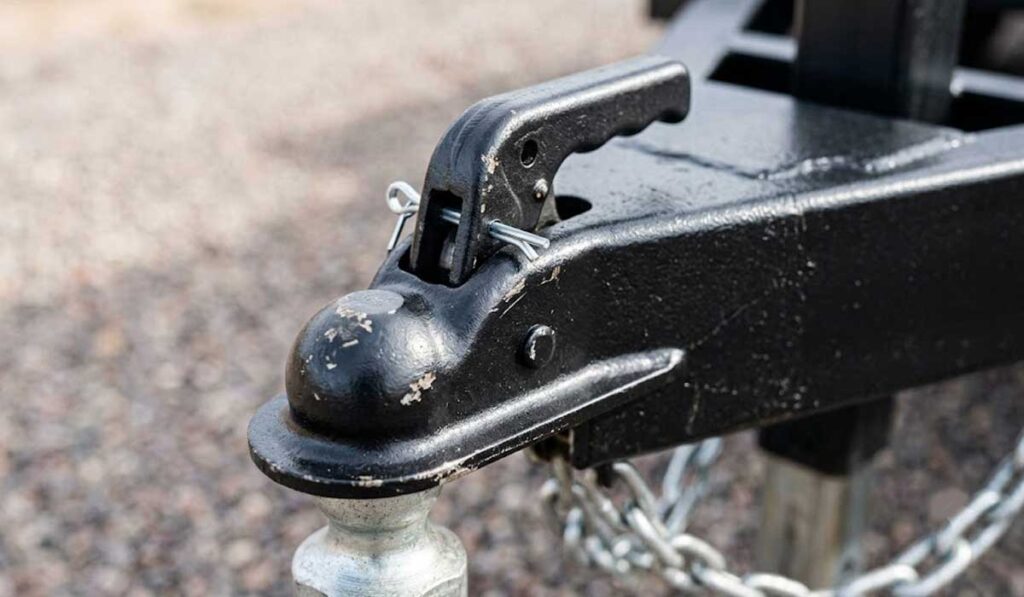
The coupler is the connection between the trailer and the tow vehicle. If it is loose, mismatched, or cracked, your truck cannot tow safely no matter how good the rest of the trailer looks.
Make Sure the Coupler Locks Securely and Fits Tightly
Start by matching the ball size to the coupler stamp. A 2-inch ball in a 2 and 5/16-inch coupler can feel close enough in the driveway and still jump loose on the road.
Once the coupler is seated, latch it, install the safety pin if your design uses one, and run a simple jack test. Raise the tongue jack just enough to put light upward pressure on the hitch, then confirm the coupler stays fully captured on the ball.
- Check for side-to-side play after latching
- Inspect mounting bolts for looseness or oval holes
- Look inside the socket for grooves, pits, or crushed edges
- Grease the moving latch parts if the maker calls for it
Couplers with cracks, deformation, or worn pits are classic fail points. If the latch will not stay closed, replace the coupler instead of trying to tow one more trip.
Note that some newer designs are engineered to self-latch without a separate pin, so follow the manual for your exact coupler rather than assuming every latch works the same way.
Inspect the Tongue for Cracks, Bends, or Rust
Run your light along the top, bottom, and side seams of the tongue. Look hard where the tongue joins the frame, around the jack mount, and around any gussets, because those spots take the most stress.
A loose coupler is annoying. A cracked tongue is a no-tow problem.
If the tongue is visibly bent, the welds are separating, or the metal is badly thinned by rust, skip the trip. A trailer repair shop can tell you whether the section needs reinforcement or full replacement.
This is one of the most common trailer frame repairs Iron FX handles in Mesa, and a cracked tongue is almost always weldable when caught before it fully fails.
Assess the Suspension and Spring Hangers
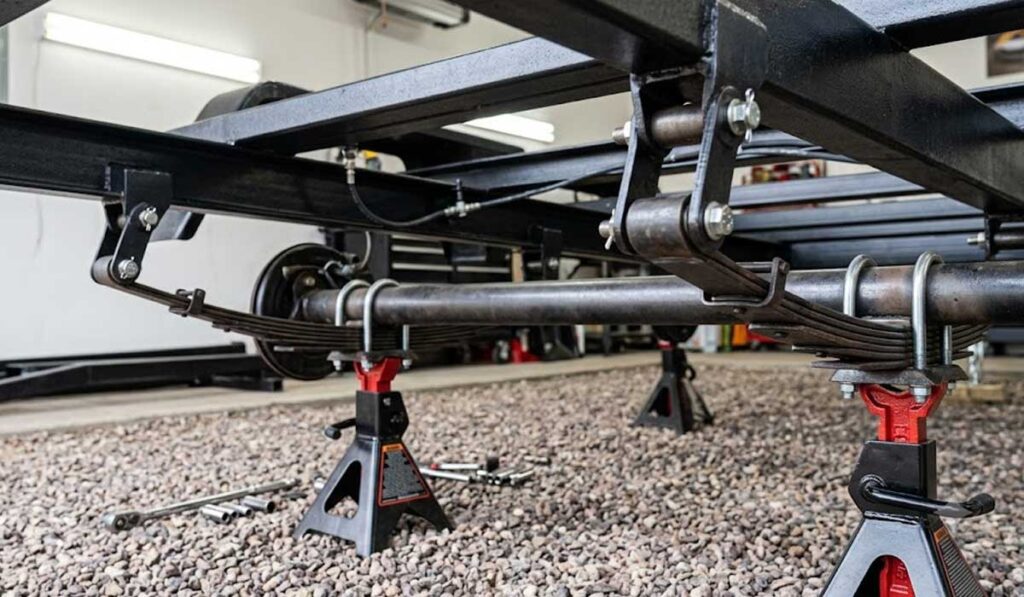
Your suspension usually warns you before a major frame failure. A trailer that leans, clunks over bumps, or starts eating tires is often showing hanger, shackle, or spring trouble first.
Check Spring Hangers for Wear, Cracks, and Alignment
Lift the trailer safely with a floor jack, support it with jack stands, and inspect each hanger with the weight off the suspension. Look for cracked welds, torn brackets, and bolt holes that have gone egg-shaped.
Then grab each shackle and try to move it. Too much side play usually means worn bushings or bolts, and that extra movement beats up the frame over time.
- Cracks at hanger welds mean stop and repair
- Elongated bolt holes mean the hanger is already wearing out
- Loose U-bolts can let the axle shift under the springs
- A trailer sitting lower on one side often points to a weak spring pack or a damaged hanger
Cracked spring hangers are a weld repair, not a wait-and-see item. Once the bolt holes go oval, the problem gets more expensive fast, so it is worth fixing at the first sign of movement.
Examine Leaf Springs for Flattening or Separation
Healthy leaf springs keep a visible arch. If the leaves are flat under normal load, cracked, shifted sideways, or separating from the pack, they are near the end of their life.
A smart field check is to compare both sides, then measure from the center of the coupler to each side of the axle, or to each front axle wheel center on a tandem setup. If those numbers do not match closely, you may have a bent axle, a shifted hanger, or a frame that is no longer square.
Make this part of your routine every six months, and always before a long trip. It is far cheaper to replace bushings, bolts, or springs now than to deal with a broken hanger on the shoulder of the 202 in July.
Verify Frame Level and Weight Distribution
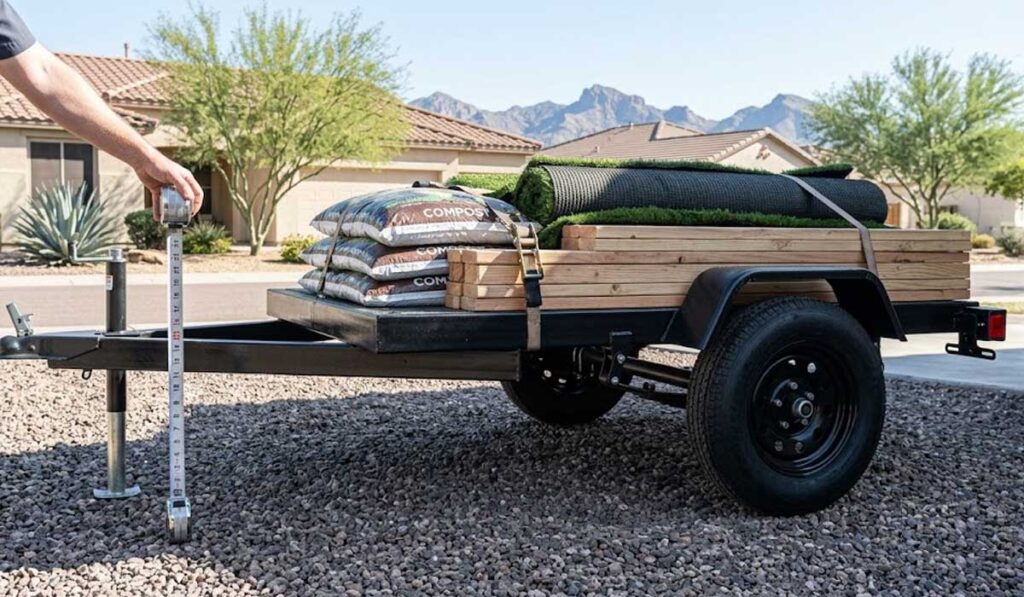
This step is where handling problems start to make sense. A trailer can look mostly fine underneath and still tow poorly because the load is wrong or the frame is no longer level.
Measure Frame Height at the Front and Rear
Load the trailer the way you actually travel, park on level ground, and measure from the ground to the frame near the coupler and near the rear. Write the numbers down so you can compare them after you move cargo or adjust your hitch.
A common guideline puts conventional trailer tongue weight at about 10 to 15 percent of the loaded trailer weight. Too little weight on the ball is a classic setup for trailer sway, while too much can overload the rear of the tow vehicle and make the steering feel light.
If your trailer sits nose-high or tail-low, fix the loading problem before you blame the road. A weight-distribution hitch can help balance a properly rated setup, but it does not increase the towing capacity of the hitch, the trailer, or your truck, and it cannot hide real frame damage.
Look for Uneven Tire Wear as a Sign of Misalignment
Tires are honest. They usually show trouble before you feel it in the seat.
| What You See | What It Usually Means | What to Do Next |
|---|---|---|
| Inside or outside edge wear | Axle or hanger misalignment | Measure coupler-to-axle distances and schedule alignment service |
| Cupping or patchy wear | Weak suspension or wheel assembly problems | Inspect springs, bushings, and hubs |
| Both tires on one side wearing faster | Uneven loading or a low side of the frame | Rebalance cargo and recheck frame height |
| Rapid wear on one tire after a curb hit | Possible bent axle or spindle | Stop towing until it is checked |
If you want hard numbers, a public truck scale will tell you whether your real trailer weight, tongue load, and towing capacity are working together or against you.
Check the Safety Chains
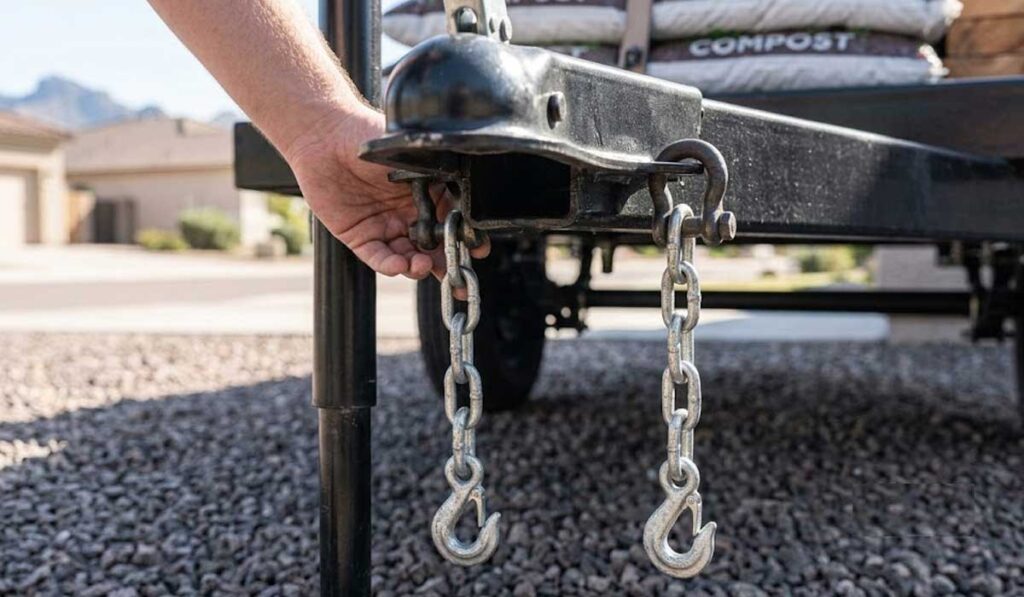
Safety chains are your backup if the main connection fails. They are not there to make a bad coupler acceptable, but they can keep the tongue off the pavement long enough for you to slow down and stay in control.
Inspect for Rust, Cracks, or Stretched Links
Check every link, hook, latch, and mounting point. Replace chains with cracked, heavily rusted, thinned, or stretched links, and do the same for bent hooks or worn attachment hardware.
- Cross the chains under the coupler so they can cradle the tongue
- Leave enough slack for turns, but not so much that they drag
- Clip each chain to frame-mounted points on the tow vehicle
- Keep the breakaway cable separate from the chains if your trailer uses one
Safety guidance and state guidance both stress that chains must be strong enough to control the loaded trailer if the primary coupling fails. If you see serious rust at the chain mounts, inspect the frame around those mounts too, because that area often corrodes from the inside out.
On a boat trailer, rinse the chains and hooks after use just like the brakes and spring hardware, since those small steel parts often fail before the larger frame sections do.
When to Stop and Call a Pro
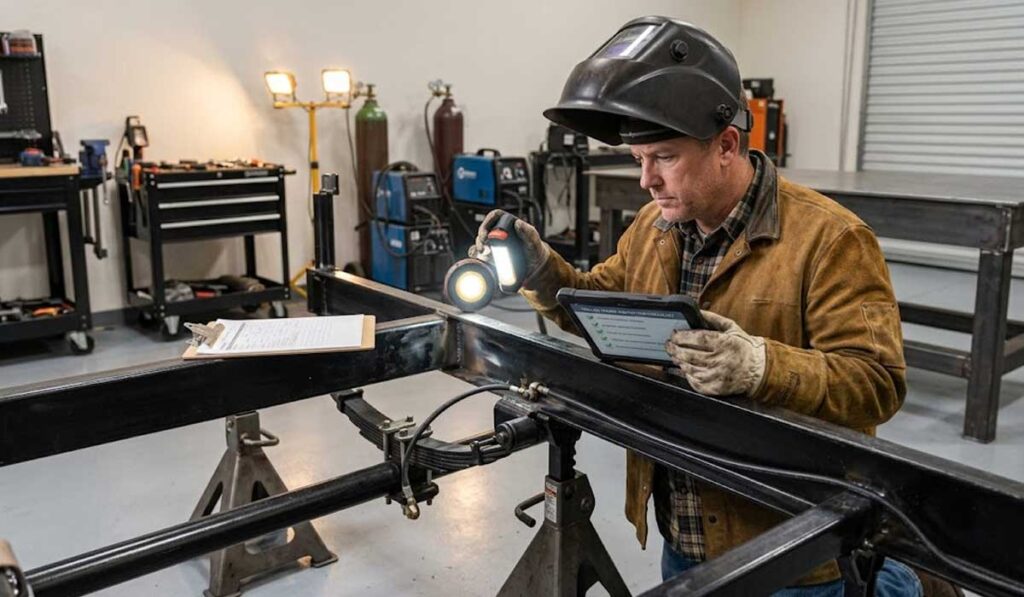
You do not need a full shop to spot the big warning signs on a trailer frame. Check the rails, coupler, tongue, springs, tires, and chains, then fix problems before they turn into a roadside failure. If anything looks cracked, bent, loose, or badly rusted, do not tow. Get it inspected and put towing safety first.
Light surface rust and loose fasteners are things most owners can clean and tighten. Structural cracks, bent members, separating welds, or a frame that is no longer square are jobs for a trained welder.
Many of these are straightforward repairs when caught early and much larger jobs when ignored. If you are anywhere in the East Valley and something on your frame does not look right, Iron FX Welding can inspect it and tell you honestly whether it needs a weld, reinforcement, or replacement.
Frequently Asked Questions – Trailer Frame Safety
How do I check if my trailer frame is safe to tow?
Look the frame over in good light and check for heavy rust, cracks, bent or rippled rails, and loose or missing fasteners. Run your eye along every weld and watch for gaps, rough metal, or a thin rust line that signals movement. Then check coupler fit, tongue condition, spring hangers, tire wear, and that the trailer sits level under load. If anything looks structural rather than cosmetic, have it inspected before you tow. Iron FX inspects trailer frames across Mesa and the East Valley.
What signs of damage mean I should not tow?
Large rust holes, deep or growing cracks, and broken welds mean stop. A twisted or sagging frame, a bent axle, a cracked tongue, or missing fasteners all mean the trailer should not go on the road until a shop looks at it. A crack that opens or moves when you rock the trailer is a clear no-tow signal. When in doubt, call a repair shop rather than risk a failure under load.
Can I repair trailer frame damage myself?
Light surface rust, loose bolts, and worn hardware are within reach for many owners with basic tools. Structural cracks, bent rails, separating welds, and damaged spring hangers are different. Those affect the load path and need proper crack prep, the right welding process, and correct reinforcement, which is why they belong with a trained welder. A patch weld over an unprepped crack usually fails again. Iron FX handles this kind of structural trailer repair in Mesa.
How often should I inspect my trailer frame?
Do a quick visual check before every trip, looking at the coupler, tongue, tires, and chains. Run a full inspection each season, and any time after rough roads, a hard curb hit, or a heavy haul. In Arizona, add a look after monsoon season if the trailer sits outside, since trapped water speeds up corrosion in frame channels. Catching small issues early keeps them from turning into roadside failures.
Is a cracked trailer tongue repairable, or does it need replacing?
It depends on how far the damage has gone. A tongue caught early, with a localized crack and sound surrounding metal, is very often repairable by grinding out the crack, welding it properly, and reinforcing the joint. A tongue that is badly bent, heavily rusted, or cracked in several places may need a section replaced. The only way to know is an inspection. Iron FX can assess your tongue and give you a straight answer. Call 480-900-1540.
Can Iron FX come to me if my trailer is not safe to move?
Yes. If your trailer is not roadworthy, Iron FX offers mobile welding and can come to your location across Mesa and the East Valley to inspect and, in many cases, repair the frame on-site. Call or text 480-900-1540, describe the situation, and send a photo if you can so we arrive with the right gear.