
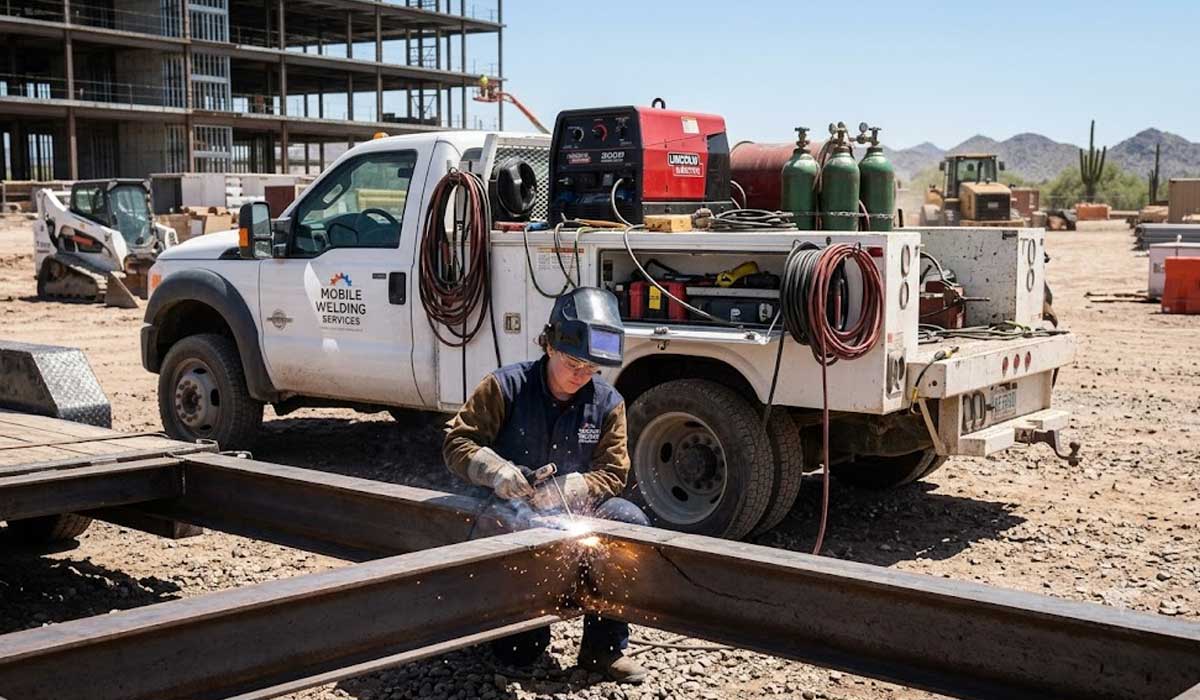
What Types of Metal Can a Mobile Welder Fix On-Site?
In most cases, a mobile welder can handle steel, aluminum, stainless steel, and some cast iron right on-site with MIG, TIG, stick welding, and portable plasma cutting.
Simple trailer repairs and farm fixes are often good candidates for same-day service, while high-risk structural jobs or exotic alloys may need more planning.
This guide walks you through the metals a mobile welder can repair, the welding techniques and tools that work best, and the real factors that shape repair costs and structural welding.
If you’re in Mesa, Gilbert, Chandler, Tempe, or Scottsdale and need on-site work, Iron FX Welding can help.
Let’s keep it simple and go metal by metal.
Key Takeaways
- Mobile welders can usually fix mild steel, stainless steel, aluminum, and many cast iron parts on-site with the right prep, filler metal, and heat control.
- Steel is the most field-friendly metal, which is why trailer repairs, gates, equipment repairs, and many structural repairs are often done with mobile welding trucks.
- Aluminum and stainless steel need cleaner prep and tighter heat control, so the welder may choose TIG or pulse MIG instead of a faster process.
- Copper, brass, titanium, and nickel alloys are possible but more selective, because shielding gas, filler choice, and contamination control matter much more.
- Metal thickness, crack location, accessibility, and safety rules often decide whether the repair makes sense on-site or should move to a shop.
Common Metals Mobile Welding Can Fix On-Site
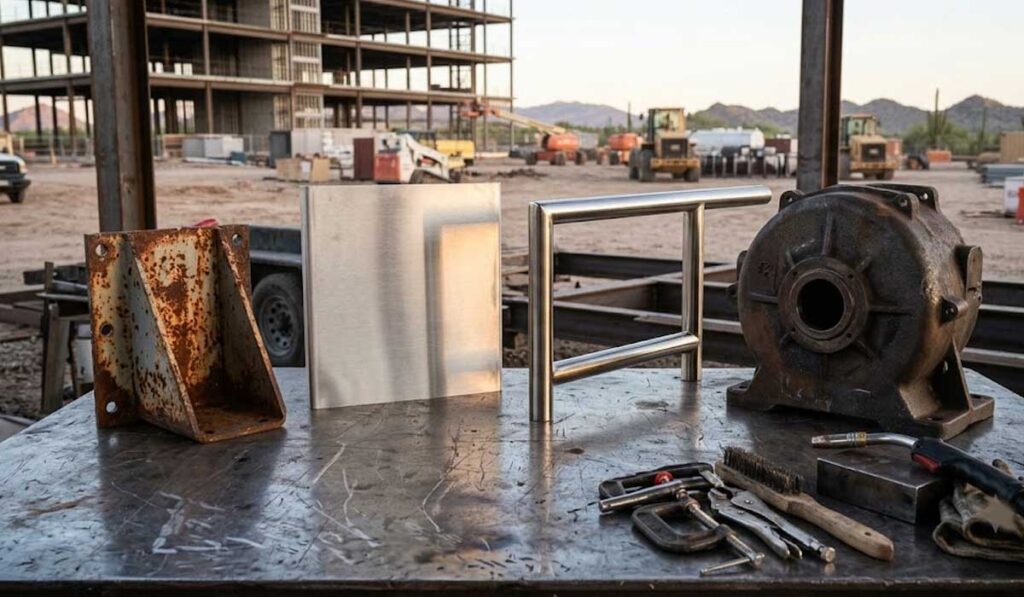
Most mobile welding calls in the East Valley come down to four materials: steel, aluminum, stainless steel, and cast iron. A well-equipped truck can support on-site welding, metal cutting, grinding, fit-up, and light custom fabrication for all four, but each metal has its own rules.
At Iron FX, our rigs carry a Lincoln Frontier 400X and a Lincoln Ranger 330 MPX, both engine-driven welder generators, plus a full-size generator and full consumables.
That means we can work anywhere across Mesa and the East Valley without needing site power, and we can match the process to the metal instead of forcing every repair through one machine. That is how you protect structural integrity and avoid paying twice for the same job.
| Metal | Common On-Site Jobs | Usual Process | What Makes It Tricky |
|---|---|---|---|
| Steel | Trailer repairs, gates, beams, brackets, agricultural equipment | Stick, MIG, flux-cored, plasma cutting | Rust, paint, fatigue cracks, load-bearing requirements |
| Aluminum | Trailer panels, ramps, tanks, HVAC parts, marine items | TIG, spool-gun MIG, pulse MIG | Warping, oxide layer, porosity, alloy matching |
| Stainless Steel | Food-grade frames, railings, exhaust parts, guards, pipe | TIG, MIG, flux-cored for thicker work | Heat tint, sugaring, contamination, corrosion loss |
| Cast Iron | Housings, manifolds, older machinery, some axle parts | Nickel rod stick, TIG in select cases, brazing | Cracking from fast cooling and unknown base-metal chemistry |
Steel
Steel is the easiest metal for most portable welding jobs, which is why it shows up so often in trailer repairs, gate work, dumpster repair, farm calls, and construction equipment repair.
It tolerates field conditions better than aluminum or titanium, and the welder can usually prep it with a grinder, cut out bad sections, fit a new plate, and weld it back into service in one visit.
If the repair is load-bearing, ask whether it counts as structural welding. As of the 2025 edition, AWS D1.1 remains the main US code many crews use for structural steel, qualification, and inspection, so that kind of repair may call for documented procedures, qualified welders, and post-repair welding inspections.
- Best on-site uses: cracked trailer tongues, broken hinges, steel gates, brackets, guard posts, and equipment guards.
- Best field processes: stick welding for dirty or outdoor work, MIG or flux-cored for faster buildup, and plasma cutting for clean section removal.
- Common add-ons: gussets, fish plates, sleeves, and other small custom fabrication pieces that strengthen the repair.
Aluminum
Aluminum can absolutely be repaired on-site, but it is much less forgiving than steel. Miller notes that aluminum conducts heat much faster than steel, and its surface oxide melts at a much higher temperature than the base metal, which is why dirty prep or too much amperage quickly leads to lack of fusion, porosity, or warping.
That matters on thin trailer skins, toolboxes, ramps, and light frames. A mobile welder will often pick TIG for cleaner heat control, or spool-gun or pulse MIG when speed matters and the part has enough thickness to handle it.
For aluminum, clean metal, short welds, and solid clamping usually matter more than raw machine size.
Ask the welder which alloy the part is made from if you know it. Matching filler metal is a big deal on aluminum, because the wrong rod can leave a repair looking fine at first and cracking later under vibration.
Stainless Steel
Stainless steel welding works well in the field when the welder can keep the joint clean and control oxygen exposure.
TIG is usually the best choice for thin, visible, or sanitary work, while MIG can make sense for thicker guards, railings, and some industrial equipment where speed matters.
For tube and pipe, back purging is often the difference between a clean repair and a weak one. Miller points out that stainless tube and pipe traditionally require an argon back purge to reduce sugaring on the backside of the weld and preserve corrosion resistance.
- Use dedicated stainless brushes and grinding discs that have never touched carbon steel.
- Keep heat input low enough to limit discoloration and distortion.
- On pipe and sealed sections, ask if purging is needed before the first arc starts.
This is one of the most common places where cheap prep turns into an expensive callback. If the stainless repair will see water, chemicals, food contact, or outdoor exposure, cleanliness matters just as much as bead appearance.
Cast Iron
Cast iron is repairable on-site, but it is the most temperamental of the four common field metals. The usual approach is crack prep, preheat, short weld passes with a high-nickel rod, and then very slow cooling with insulation or thermal blankets.
Filler choice matters here. In practice, Nickel 99 is often chosen when the repaired area may need machining afterward, while Nickel 55 is often favored when a little more strength and ductility are needed.
The biggest mistake is rushing the cool-down. A cast iron part can survive the weld itself and still split beside the repair if it cools too fast, which is why some jobs that look small on the surface still take hours on-site.
Specialty Metals and Alloys
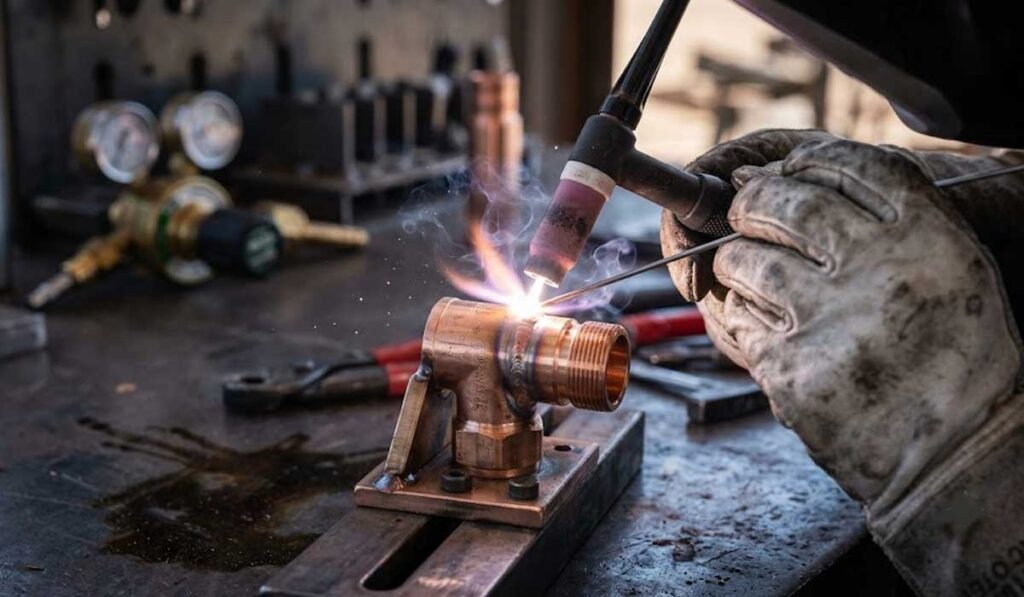
Iron FX and other mobile welders can repair more than the usual steel-and-trailer jobs, but specialty metals narrow the margin for error fast. If the part is expensive, pressure-related, or critical to safety, the best welder may still recommend shop work even if a field repair is technically possible.
| Metal or Alloy | On-Site Repair Odds | Typical Joining Method | Best Use Case |
|---|---|---|---|
| Copper and brass | Fair | Brazing, silver soldering, TIG in select cases | Small leaks, fittings, decorative parts, light brackets |
| Titanium | Low | TIG with inert shielding and back purging | Clean, accessible cracks or tube work with controlled setup |
| Nickel alloys | Low to fair | TIG or MIG with matching filler | Exhaust, heat-resistant components, corrosion service parts |
Copper and Brass
Copper and brass usually push a mobile welder toward brazing or soldering instead of full fusion welding. These metals move heat quickly, so the repair can feel cold in one second and overheated in the next if the torch setup is wrong.
That is why smaller fittings, thin brass parts, and mixed-metal joints often get a silver-brazed repair instead. Current filler selection charts from Harris list several silver-brazing options for copper or brass joined to steel or stainless, which is a good clue that brazing is often the cleaner field solution.
- Clean the joint until it is bright and oil-free.
- Support thin parts so they stay aligned as they heat.
- Use the filler metal that matches the service, not just the color.
- Expect decorative brass pieces to need finish work after the repair.
Titanium
Titanium is weldable, but it hates contamination. Miller’s current guidance for titanium pipe and tubing recommends 100% argon shielding and back purging, and it also stresses the value of gas lenses and trailing shields to protect the weld as it cools.
That is the real limiter for on-site repair services. If the welder cannot fully shield the puddle and heat-affected zone from oxygen, nitrogen, and moisture, the repair may lose strength and corrosion resistance even if it looks decent at a glance.
For that reason, field titanium work is usually limited to small, accessible jobs with excellent cleanup and stable wind control. Large pressure parts, aerospace-grade pieces, or dirty service parts usually belong in a shop.
Nickel Alloys
Nickel alloys such as Inconel are common where heat and corrosion are hard on ordinary steel. A mobile welder can repair some of these parts, especially small cracks, tabs, flanges, and exhaust-related components, but the repair needs the right filler and very clean prep.
TIG is often the safest choice because it gives better control over heat input and shielding. Matching rod matters here too, because nickel-alloy fillers are chosen for hot-cracking resistance, temperature performance, and compatibility with the parent metal.
If the part carries pressure, sees extreme heat cycling, or needs certified documentation, expect the welder to slow the job down or move it off-site. That extra caution usually saves money, because failed nickel repairs are rarely cheap the second time.
Factors That Influence On-Site Welding Feasibility
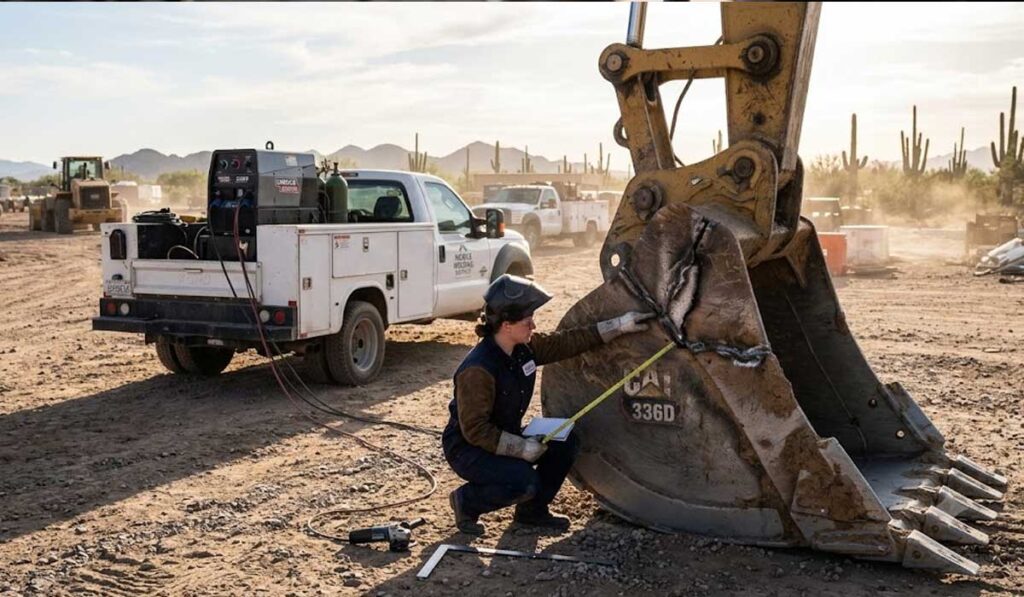
The metal type is only half the story. A good mobile welder also looks at thickness, crack location, service load, access, weather, and safety rules before saying yes to a field repair.
Cost follows the same logic. The Bureau of Labor Statistics lists the median US welder wage at $51,000 a year, or $24.52 an hour, in May 2024, but your invoice will be higher because a mobile rig includes travel, generator power, gas, consumables, setup time, and cleanup.
That is why even a small steel job can feel labor-heavy. You are paying for a working repair truck and the judgment to use it well, not just for a few inches of weld bead.
Metal Thickness
Thickness changes everything, from wire size to heat input to the number of passes needed. Thin metal punishes excess heat, while thick sections punish weak prep and shallow penetration.
| Thickness Range | Common Metals | Recommended Process | Key Note |
|---|---|---|---|
| Under 1/16 inch | Aluminum, stainless, mild steel | TIG, pulse MIG, short-circuit MIG | Light panels and trim, easiest to warp or burn through |
| 1/16 to 1/8 inch | Steel, aluminum, copper alloys | MIG, TIG, flux-cored | Common range for gates, brackets, trailer skins |
| 1/8 to 1/4 inch | Mild steel, stainless, some cast | MIG, stick, flux-cored | Sweet spot for many field repairs, strength and speed balance |
| 1/4 to 1/2 inch | Structural steel, heavy brackets, thick aluminum | Multi-pass MIG, stick, TIG for roots | Very repairable on-site with enough power and access |
| Over 1/2 inch | Heavy steel, thick cast | Multi-pass stick, flux-cored, specialty | Possible in the field but slower and costlier than expected |
| Cast iron | Gray iron, ductile iron | Nickel rods, TIG select, brazing | Crack pattern and cooling control matter more than thickness |
Damage Severity
Some metal repair jobs are quick and honest. Others are really part replacement jobs hiding behind a crack.
| Severity | Signs | Likely Fix | On-Site Feasible? |
|---|---|---|---|
| Minor | Small cracks, worn tabs, loose brackets, light gouges | Prep, weld, grind, return to service | Usually yes |
| Moderate | Through-cracks, bent members, damaged hinges, torn plate | Realign, weld, patch, or reinforce | Often yes |
| Severe | Large fractures, repeated fatigue cracks, major warping | Cut out and replace sections, add gussets | Sometimes |
| Critical | Frame failure, safety component damage, public-load structure | Engineer review, coded repair, or replacement | Sometimes, but shop work is often smarter |
- If the crack returns in the same spot, the problem is usually load path or fatigue, not just bad bead appearance.
- If rust has eaten the base metal thin, welding over it will not restore original strength.
- If the damage sits near a pivot, spring hanger, axle mount, or lifting point, treat it like a safety repair, not a cosmetic one.
Accessibility of the Repair Location
Access can turn a one-hour weld into a half-day job. The harder it is to reach, light, clean, and shield the joint, the more the repair leans toward smaller passes, slower setup, and higher cost.
- Tight spaces: Inside frames, under equipment, and behind guards often force the welder to switch to compact equipment and smaller tools, which slows fit-up and inspection.
- Elevated repairs: Roof, scaffold, and lift work adds time and safety planning. OSHA generally requires fall protection in construction at 6 feet and above, so harnesses and lift access may be part of the quote.
- Confined spaces: Welding in a tank, pit, crawl space, or enclosure may trigger permit rules, atmospheric testing, ventilation, and an outside attendant. If those controls are missing, the right answer is to stop, not improvise.
- Combustibles nearby: OSHA hot-work rules call for stronger fire controls around welding and cutting. In general industry, combustibles should be cleared for 35 feet where possible, and a fire watch may need to stay for at least 30 minutes after the job.
- Remote sites: No power is not a deal-breaker. Our Lincoln engine-driven rigs carry their own power, but generator fuel, longer cables, spare electrodes, and extra shielding gas still need to ride in with the welder.
- Blocked joints: Guards, hydraulic lines, flooring, and body panels sometimes have to come off first. That is why a repair quote may include removal and reassembly, not just arc time.
Before You Call a Mobile Welder in Mesa
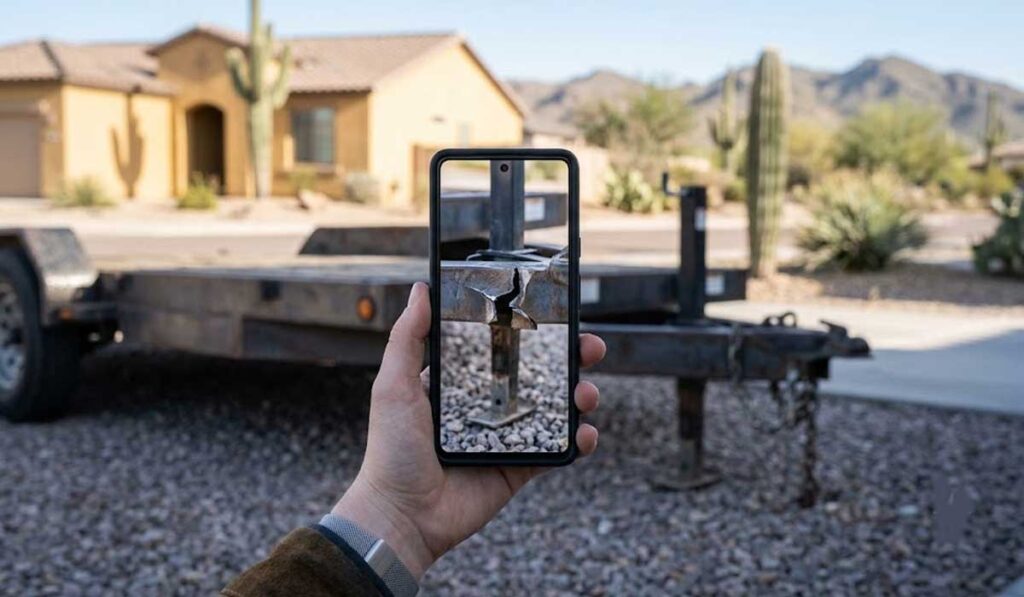
You can make the visit faster and cheaper by giving the welder better information up front. Clear photos and a few measurements often do more than a long phone description.
- Send wide photos and close-ups of the crack, bend, or broken area.
- Measure metal thickness if you can, or photograph the edge of the part.
- Say whether the metal is steel, aluminum, stainless, or unknown.
- Mention access issues, power availability, and whether the part is safety-critical.
That helps Iron FX arrive with the right filler, gas, grinders, clamps, and backup plan. It also improves the odds of true same-day service. Text your photos to 480-900-1540 and we’ll get you a quote.
Conclusion
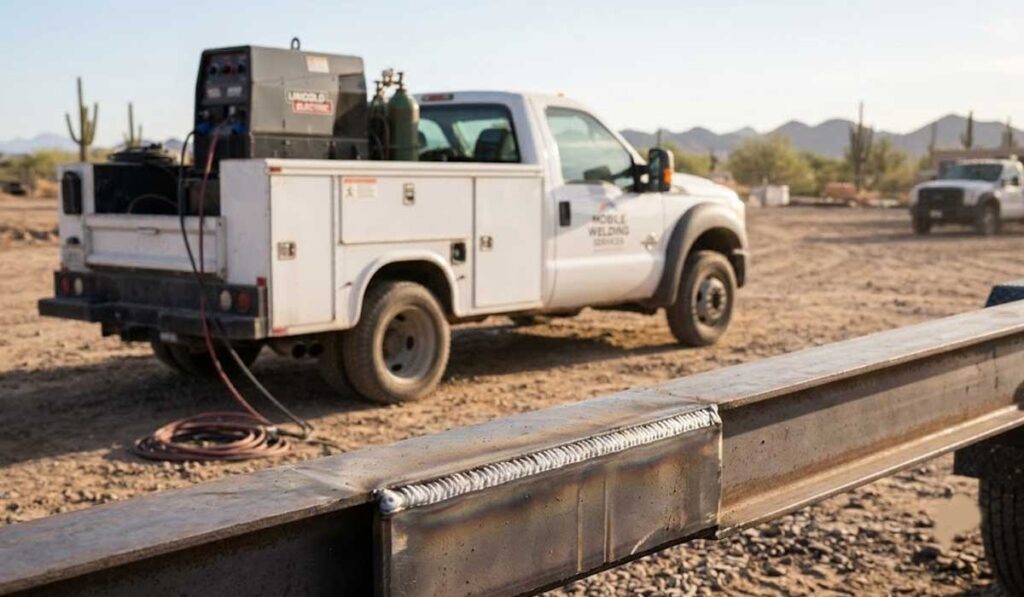
Mobile welding can fix a wide range of metals on-site, especially steel, aluminum, stainless steel, and many cast iron parts. With the right process, filler metal, and prep, a mobile welder can handle everything from trailer repairs and gate work to selected structural repairs and light custom fabrication.
Specialty metals like copper, brass, titanium, and nickel alloys are more selective, but they are still possible in the right conditions. If you describe the damage clearly and share a few photos before the truck rolls out, your welder can bring the right gear and get you back to work faster.
Iron FX Welding provides mobile welding across Mesa, Gilbert, Chandler, Tempe, and Scottsdale, backed by 10+ years of experience and a fully equipped rig. Call or text 480-900-1540 for a free estimate.
Frequently Asked Questions – Mobile Welding Metals
What types of metal can a mobile welder fix on-site?
A mobile welder can fix most common metals on-site, including carbon steel, stainless steel, aluminum, cast iron, copper alloys, and galvanized steel. Iron FX handles all of these across Mesa, Gilbert, Chandler, Tempe, and Scottsdale, matching the welding process to the metal so the repair holds up. Steel is the most field-friendly, while aluminum, stainless, and cast iron take more prep and heat control.
Can a mobile welder weld stainless steel and aluminum on-site?
Yes. Iron FX welds both stainless steel and aluminum in the field, but each metal needs a different technique. Aluminum needs tighter heat control and matching filler or the right shielding gas. Stainless needs clean tools and controlled heat to protect corrosion resistance. The welder picks TIG or MIG and tunes the settings on-site based on the part.
Can mobile welders fix rusty or galvanized metal on-site?
Rusty metal can be repaired after cleaning, because clean base metal welds far better than corroded metal. Galvanized steel needs extra care, since the zinc coating can produce toxic fumes when heated. Iron FX strips the coating from the weld zone or works in open, ventilated conditions to keep the job safe.
Are there metals a mobile welder should not try on-site?
Thick cast iron and some exotic alloys are usually better handled in a shop, because they need controlled heating and slow, managed cooling. Pressure vessels, aerospace-grade parts, and certified structural repairs also often belong off-site. A good mobile welder like Iron FX will tell you when a job needs shop work rather than risk a bad repair.
How much does mobile welding cost in Mesa?
Mobile welding includes a service call fee plus labor, so the total runs higher than shop rates because you’re paying for the truck, generator power, gas, consumables, and travel. Small steel repairs are usually the most affordable, while aluminum, stainless, and structural work take more time. Iron FX quotes every job before starting. Call 480-900-1540 with a photo for a free estimate.
What areas does Iron FX Welding serve?
Iron FX Welding is based in Mesa, AZ and provides mobile welding across the East Valley, including Gilbert, Chandler, Tempe, and Scottsdale. For jobs outside that area, call 480-900-1540 and we’ll let you know if we can reach your location.