
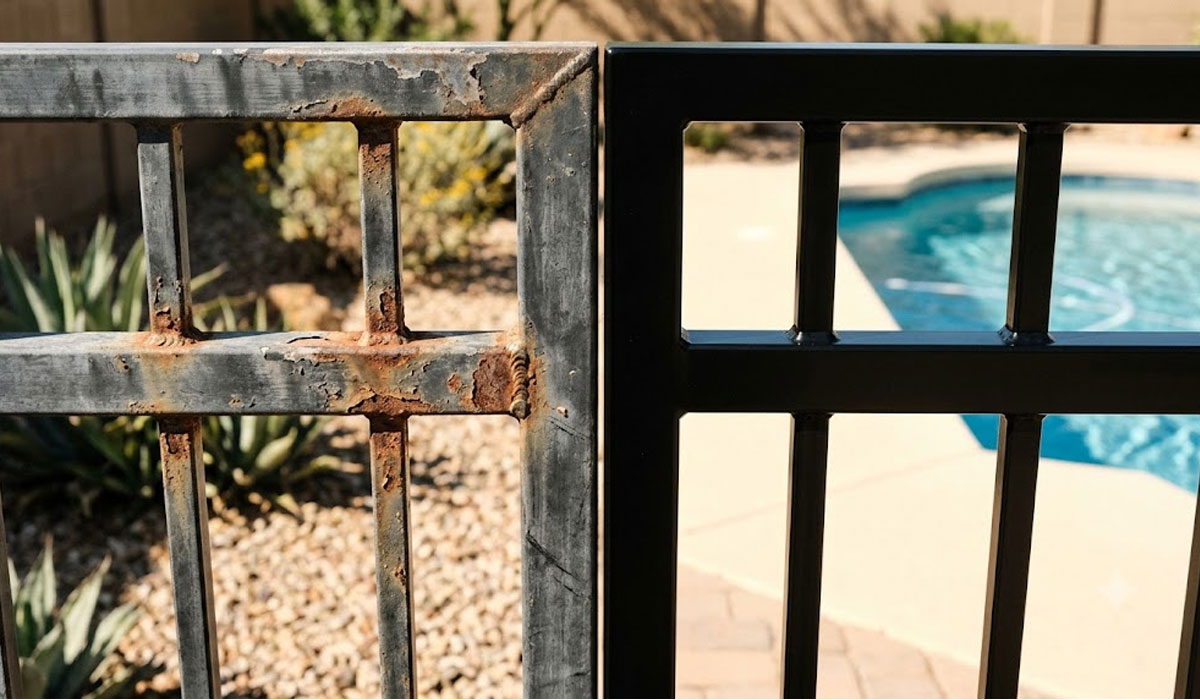
Why the Finish on Your Arizona Gate, Railing, or Trailer Fails (And What Actually Makes It Last)
If you have watched a gate, railing, or trailer finish go from sharp to chalky and rusting within a couple of years, you have seen what Arizona does to metal coatings that were not prepared correctly.
The sun, heat, dust, and monsoon moisture in the Phoenix metro area expose every shortcut taken before the color ever went on.
Here is the part most people do not realize: the finish almost always fails before the metal does.
A well-built steel gate can start looking worn long before the frame is anywhere near the end of its life, and the reason traces back to three things. Weak surface prep, the wrong coating chemistry for full sun, or a cure that never fully finished.
Iron FX Welding fabricates gates, railings, trailer components, and custom metalwork in Mesa, AZ, and prepares every piece for Arizona conditions before it goes to finish. This guide explains why finishes fail in the East Valley and what actually makes one last. Call 480.900.1540 for a free estimate on fabrication or repair.
Why Metal Finishes Fail Faster in the Arizona Desert
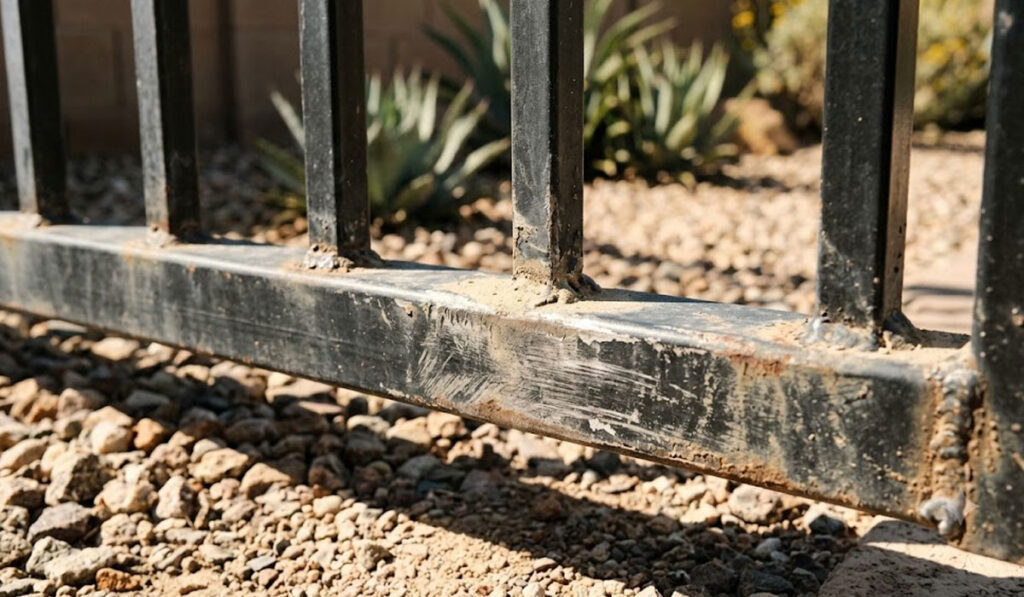
Arizona rarely ruins a finish in one event. It wears it down a little at a time until the fade, chips, and rust are impossible to ignore. Three forces drive that breakdown in the Phoenix metro.
UV exposure is the first and most damaging. The UV index in the Mesa and Phoenix area regularly hits 10 to 11 during summer, which the EPA classifies as extreme.
That level of ultraviolet exposure breaks down coating resins over time. A finish built on the wrong chemistry loses gloss first, then color, then adhesion. Indoor-grade epoxy coatings and cheap hybrid systems look fine on day one and start chalking within a year or two of full sun exposure.
Heat is the second force. Surface temperatures on exposed metal in a Mesa summer can exceed 150 degrees. That heat speeds up the chemical breakdown of weak coatings and stresses the bond between the finish and the metal. Repeated daily heating and cooling cycles work at any weak point in the coating until it lifts.
Dust and wind abrasion is the third. Wind-blown grit acts like fine sandpaper. It hits leading edges, bottom rails, corners, and bolt areas first. This is why trailer frames, gate bottoms, and railing posts often fail at the edges and wear points before the flat middle sections show any wear at all. Monsoon storms drive grit harder and faster, accelerating the abrasion on anything with a thin or poorly bonded finish.
Together these three forces find and exploit every shortcut taken in surface prep and coating selection. A finish that would last a decade in a mild climate can fail in three years on a west-facing gate in Mesa.
The Finish Is Only as Good as the Prep Underneath It
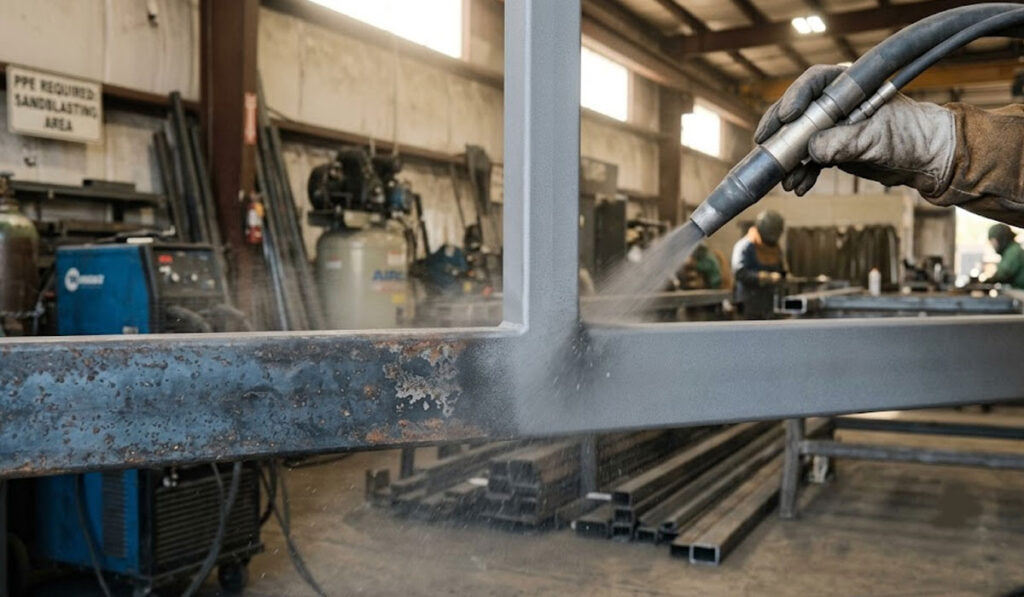
The single biggest factor in how long a finish lasts is what happens to the metal before any coating is applied. The color coat gets all the attention, but the preparation steps underneath it decide whether the job survives two summers or fifteen years.
A contaminated or poorly prepared surface gives the coating nothing solid to bond to. Oils, mill scale, rust, fingerprints, and leftover grinding dust all create weak spots where the finish will eventually lift, and Arizona sun and moisture find those weak spots fast.
Proper preparation for exterior metal in Arizona follows a specific sequence. The metal is degreased to remove oils, cutting fluid, and handling residue, because no coating bonds well over contamination.
The metal is sandblasted to bare metal to create a clean surface profile and remove mill scale and any existing rust. A zinc-based primer or conversion coating is applied to create a corrosion barrier between the raw steel and the topcoat. Only then is the powder coat or finish applied.
That sequence is what separates a finish that lasts from one that fails early. When a shop skips the blasting and just scuffs the surface, or skips the primer step, the coating has far less to hold onto and corrosion can start at any small breach in the surface.
What Coating Failures Look Like and What Caused Them
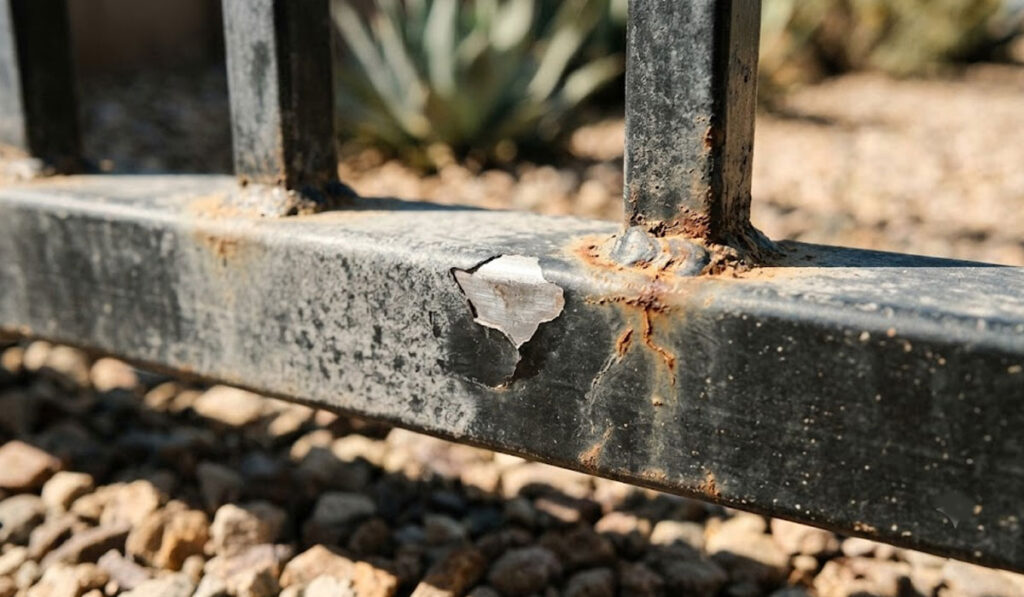
When a finish starts to fail, the pattern usually tells you what went wrong. Recognizing these patterns helps you understand what to ask for so you do not pay for the same mistake twice.
Chalking or fading is the most common failure in Arizona. The finish loses its gloss and the color goes flat and dusty. This is almost always caused by the wrong resin for full sun exposure, weak UV resistance in the coating, or a film that was applied too thin.
The fix is an exterior-grade polyester or super-durable powder coat rated for outdoor exposure rather than an indoor-grade or hybrid coating.
Edge chips and cracking show up first at corners, edges, and sharp transitions. This happens when the coating is applied too thin at the edges, when sharp edges were not smoothed before coating, or when the cure was incomplete and the finish never fully hardened. Proper edge preparation and full film coverage at corners prevents this.
Bubbles and pinholes appear as small raised spots or tiny holes in the finish. These come from oil, trapped moisture, or outgassing from porous metal during the cure. Cast parts and previously coated metal are most prone to this and need to be baked out before coating to release trapped contamination.
Rust under the coating is the expensive failure. The finish can still look acceptable from a few feet away while corrosion spreads underneath it. This traces back to weak prep, missed seams, bare spots that never got primed, or chipped edges that were left untreated until the rust crept inward.
This is the failure that proper sandblasting and zinc priming is specifically designed to prevent.
The common thread in all four failures is that they start in the preparation and coating selection, not in the metal itself. A gate that was prepped correctly and finished with the right coating for Arizona sun resists all four.
What Finish to Ask For on Arizona Metalwork
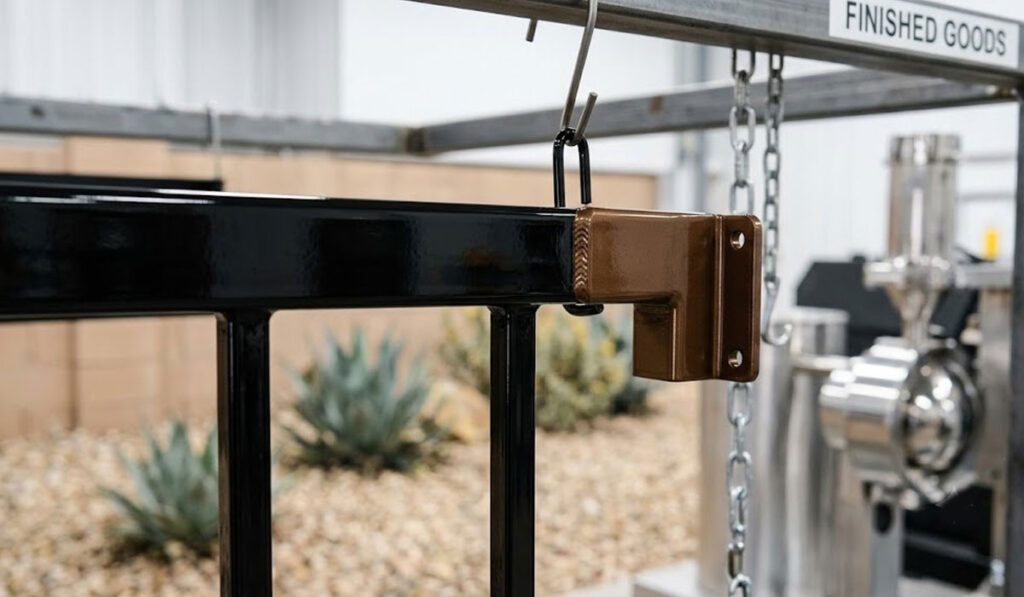
The right finish depends on what the piece faces day to day. A front gate in full sun, a trailer frame that takes road abuse and dust, and an interior railing each have different requirements. For most exterior metalwork in Mesa and the East Valley, the conversation should start with exterior-grade powder coat.
Exterior-grade polyester powder is the practical standard for outdoor metalwork in Arizona. Super-durable polyester systems are formulated for better weathering and color retention than basic indoor-grade powders, which makes them the right starting point for gates, fencing, railings, trailer frames, and any steel that lives outside year-round.
For architectural metalwork where long-term color retention matters, AAMA 2604 and AAMA 2605 rated finishes are a step up in exterior durability. The 2605 spec is the high-performance exterior tier with a documented long-term weathering benchmark.
For a highly visible front gate or commercial railing where you want the color to last for many years, asking for a 2604 or better finish is reasonable.
The finish also has to be cured correctly. A powder coat only reaches its rated durability if the metal itself reaches full cure temperature for the full cure time.
Thick sections, like a trailer tongue, a heavy bracket, or a welded corner, heat up more slowly than thin pickets. If the cure timer starts before the heaviest part of the piece reaches the required temperature, the finish can appear cured while the thickest metal remains undercured, and that section fails first.
How to Make a Metal Finish Last Longer in Arizona
Even a properly prepped and correctly finished piece benefits from basic maintenance in Arizona’s climate. A simple routine extends the life of the finish significantly and catches small problems before they spread.
Rinse the metal after dust storms and windy stretches. Fine desert grit sitting on the surface keeps scratching during normal use and wash-downs, and it grinds into hinges and moving hardware. A quick rinse removes the abrasive before it does damage.
Touch up any chip promptly. A chip in the powder coat exposes bare steel, and rust begins there. A matching touch-up applied within a few weeks of a chip appearing stops the damage at the surface. Left through a monsoon season, the rust undercuts the surrounding coating, and the repair becomes a refinishing job.
Keep sprinkler overspray off the metal. Regular irrigation spray hitting the bottom rail of a gate or the base of a railing post is one of the most consistent causes of early corrosion on otherwise well-finished metalwork in Mesa. Adjust sprinkler heads to keep water off the metal.
Inspect after the monsoon season. Check welds, edges, and hardware in October for any finish damage, chips, or early rust spots. Catching a problem at the surface in the fall is a minor touch-up. Catching it two years later is a strip-and-refinish.
Frequently Asked Questions
Metal Finishes in Arizona
Why does powder coat fail so fast in Arizona?
Powder coat fails fast in Arizona primarily from extreme UV exposure, surface heat, and dust abrasion combined with weak surface prep or the wrong coating for outdoor use. The UV index in the Mesa area regularly reaches 10 to 11 in summer, which breaks down coating resins over time. When a coating is applied over poorly prepped metal or uses an indoor-grade formula, it chalks, fades, and lifts within a few years. Iron FX Welding in Mesa sandblasts and primes metal before finishing and specs exterior-grade powder coat for Arizona conditions. Call 480.900.1540.
What makes a metal finish last longer in the Arizona sun?
A metal finish lasts longest in Arizona when three things are done correctly. The metal is sandblasted to bare metal and primed before coating, an exterior-grade polyester or higher-spec powder coat is used rather than an indoor formula, and the piece is cured fully so the thickest sections reach cure temperature. Skipping any of these is what causes early failure. Iron FX Welding in Mesa handles the prep in-house and specs the finish to the application. Call 480.900.1540 to discuss a project.
Can a rusted or faded gate be refinished instead of replaced?
In most cases, yes. If the gate frame is structurally sound and the damage is limited to the finish and surface rust, the gate can be stripped, prepped, primed, and refinished for less than the cost of a new gate. Iron FX Welding in Mesa assesses existing gates and railings and gives an honest recommendation on whether refinishing or replacement makes more sense for the specific piece. Call 480.900.1540 for a free assessment.
What finish should I ask for on an outdoor gate or railing in Mesa?
For most outdoor metalwork in Mesa, ask for an exterior-grade super-durable polyester powder coat applied over sandblasted and primed metal. For high-visibility architectural pieces where you want color to hold for many years, an AAMA 2604 or 2605 rated finish is a stronger choice. The most important factor is that the prep is done correctly before the coating goes on, because even a premium coating fails over poor prep. Iron FX Welding in Mesa preps and specs finishes for Arizona conditions. Call 480.900.1540.
Does the finish or the metal usually fail first on Arizona gates?
The finish almost always fails first. A well-built steel gate frame can last decades, but a poorly prepped or incorrectly specified finish can start chalking, fading, and rusting within two to three years in full Arizona sun. This is why the prep work and coating selection matter as much as the quality of the metal fabrication. Iron FX Welding in Mesa builds gates with both durable construction and proper finish preparation. Call 480.900.1540.
How do I keep my powder-coated metalwork from rusting in Mesa?
Keep powder-coated metalwork from rusting in Mesa by touching up any chips promptly before rust starts, keeping sprinkler overspray off the metal, rinsing off dust after storms, and inspecting welds and edges after monsoon season. Most rust on finished metalwork starts at a chip, a worn edge, or a spot where irrigation water hits the metal regularly. Catching these early keeps small problems from becoming refinishing jobs. Iron FX Welding in Mesa repairs and refinishes metalwork that has started to rust. Call 480.900.1540.
Ready for Metalwork Built to Last in Arizona?
Iron FX Welding is based in Mesa, AZ, and fabricates gates, railings, trailer components, and custom metalwork for residential and commercial clients throughout the East Valley, including Gilbert, Chandler, Tempe, Scottsdale, and Apache Junction. Every exterior piece is sandblasted, primed, and prepared for Arizona conditions before it goes to finish, because prep determines how long a finish lasts in the desert sun.
Call or text 480.900.1540. Send a photo of your project or your existing metalwork and we will provide a written estimate.
Iron FX Welding, Mesa AZ. Licensed and insured. Free estimates on fabrication, repair, and refinishing.